Ever wondered where your vape came from? The history is complex, filled with different inventors and ideas over many decades, making it hard to know who truly started it all.
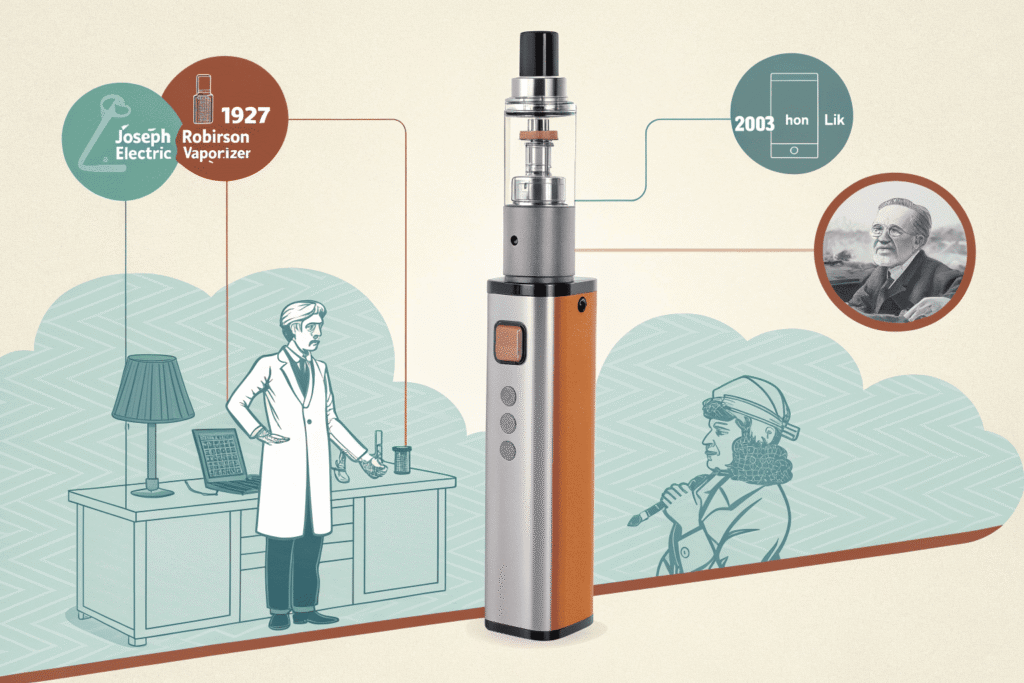
The first commercially successful vape was invented by Chinese pharmacist Hon Lik1 in 2003. However, the very first patent for an "electric vaporizer2" was filed by Joseph Robinson3 in 1927. This history shows a long evolution from early concepts to the devices we use today.
I've spent my entire career in the vape industry, starting as a salesman and eventually building my own factories. When you work with products every day, you start to appreciate the journey they took to get here. Understanding the origins of vaping, from the earliest ideas to the first device that actually worked, helps me appreciate the technology we have now. It’s a fascinating story of innovation driven by a desire for a better alternative. This history guides us at BAE Vapor4 as we continue to innovate and build devices for our clients' brands. Let's dive into the key moments and people who made vaping possible.
When was the first vape ever invented?
Think vaping is a 21st-century thing? You might be surprised. The true origins are much older than most people realize, hidden deep in the archives of the patent office.
The very first concept for a vape-like device was invented in 1927 by Joseph Robinson3, who filed a patent for an "electric vaporizer2." However, his invention was never commercialized and remained a concept. The first working prototype came decades later.
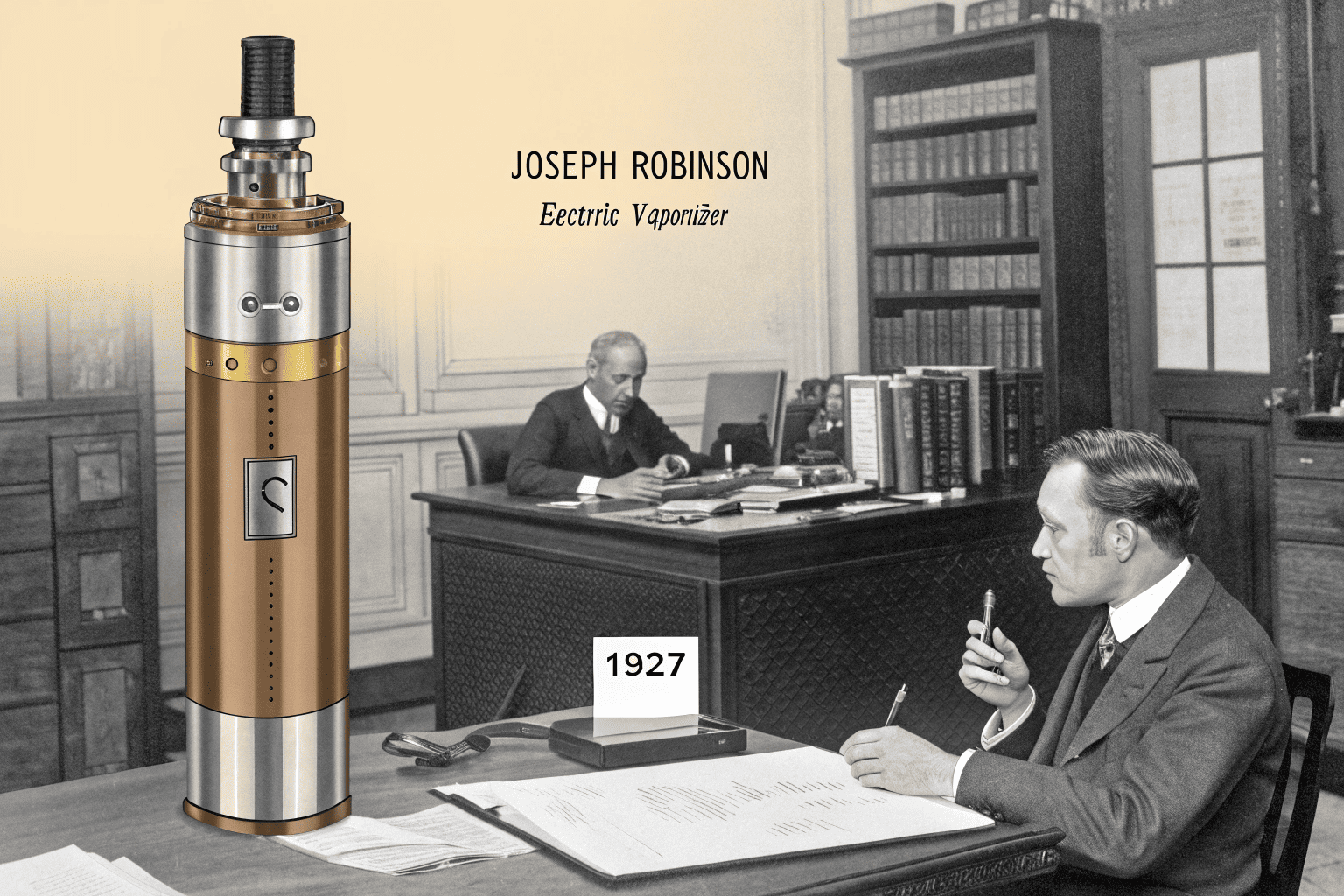
The timeline of the vape's invention isn't a straight line. It's more like a series of important steps taken by different people years apart. Two figures stand out in the early history, long before the first products hit the shelves.
The Earliest Concepts
The journey began with ideas on paper. These early inventors laid the groundwork for everything that would come later, even if their own projects didn't succeed.
| Inventor | Year | Invention | Impact |
|---|---|---|---|
| Joseph Robinson3 | 1927 | Electric Vaporizer | He filed the first-ever patent for a device that could heat a substance to create a vapor for inhalation. It was intended for medicinal use and was never built, but it was the foundational idea. |
| Herbert A. Gilbert5 | 1963 | Smokeless Non-Tobacco Cigarette6 | He created the first working prototypes of a device that heated a flavored liquid without combustion. It produced a warm, flavored vapor. He couldn't find a company to mass-produce it. |
Gilbert was truly ahead of his time. He saw the potential for a smokeless alternative, but the technology and consumer interest just weren't there yet. His work was largely forgotten until vaping became popular decades later.
When was the first vape created?
Knowing the first idea is one thing, but who actually made the first vape that people could buy? The answer marks the true start of the modern vaping era we know today.
The first commercially successful vape was created and launched in 2003 by Hon Lik1, a Chinese pharmacist. His device was the first to effectively combine a battery, atomizer, and nicotine solution, making vaping a viable alternative to smoking.
Hon Lik1 is rightly called the father of modern vaping. His story is a personal one. He was a heavy smoker himself, and after his father, also a heavy smoker, died from lung cancer, he was driven to find a safer way to get nicotine. As a pharmacist, he had the perfect background to experiment with nicotine solutions and delivery systems. He worked to create a device that could give the user the nicotine and the physical sensation of smoking without the harmful tar and carcinogens from burning tobacco.
The Breakthrough Invention
Hon Lik1’s initial design used a high-frequency piezoelectric ultrasound element to vaporize a pressurized jet of liquid containing nicotine. While this sounds complex and is different from the simple heating coils we use today, it was the breakthrough that made it all work. His employer, Golden Dragon Holdings7, saw the potential in his invention. They changed their name to Ruyan8, which means "like smoke," and began marketing the device in China in 2004 before expanding to Europe and the US. This was the moment vaping went from an idea to a real industry.
What was the first vape ever made?
You know the names and the dates, but what did that first commercial vape actually look like? It wasn't the sleek pod system or powerful mod you might be imagining today.
The first vape ever made and sold commercially was called the Ruyan8. Created by Hon Lik1, it was a three-piece device designed to look like a traditional cigarette, with a separate battery, atomizer, and a cartridge containing the nicotine liquid.
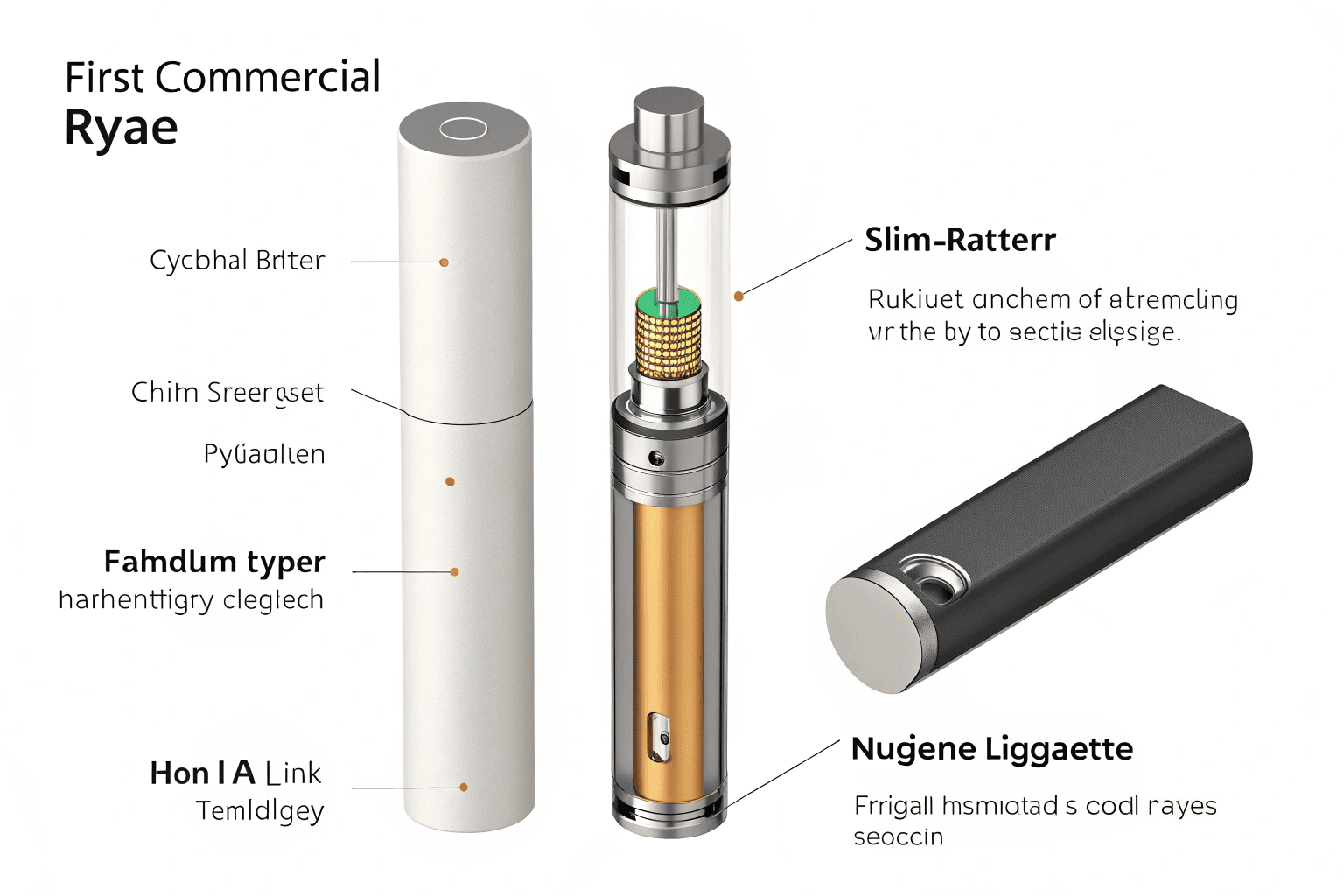
The design of the first vapes was very intentional. They were made to look and feel as much like a cigarette as possible to make it easier for smokers to switch. This design style is now known as a "cig-a-like."
The Evolution of Early Vapes
The original Ruyan8 had three separate parts that the user had to screw together:
- The Battery: This powered the device.
- The Atomizer: This was the heating element that vaporized the liquid.
- The Cartridge: A small plastic piece containing the e-liquid9 and a mouthpiece.
This three-piece model worked, but it was often messy and inconsistent. A key improvement came a few years later with the invention of the "cartomizer10." This new component combined the atomizer and cartridge into a single, disposable piece. This two-piece design was much more user-friendly and reliable, and it helped cig-a-likes dominate the early vape market. However, these devices still had their limits, like short battery life and weak vapor production, which pushed innovators to create something better.
Who made the first vape pen?
Cig-a-likes were a start, but they lacked power and battery life. A new design was needed to satisfy users who wanted more from their experience. This led to the creation of the vape pen.
The first vape pens were developed around 2010 by companies like Janty and Joyetech, with the Joye 51011 model being a major breakthrough. These devices moved away from the cigarette look, offering larger batteries and refillable tanks for better performance.
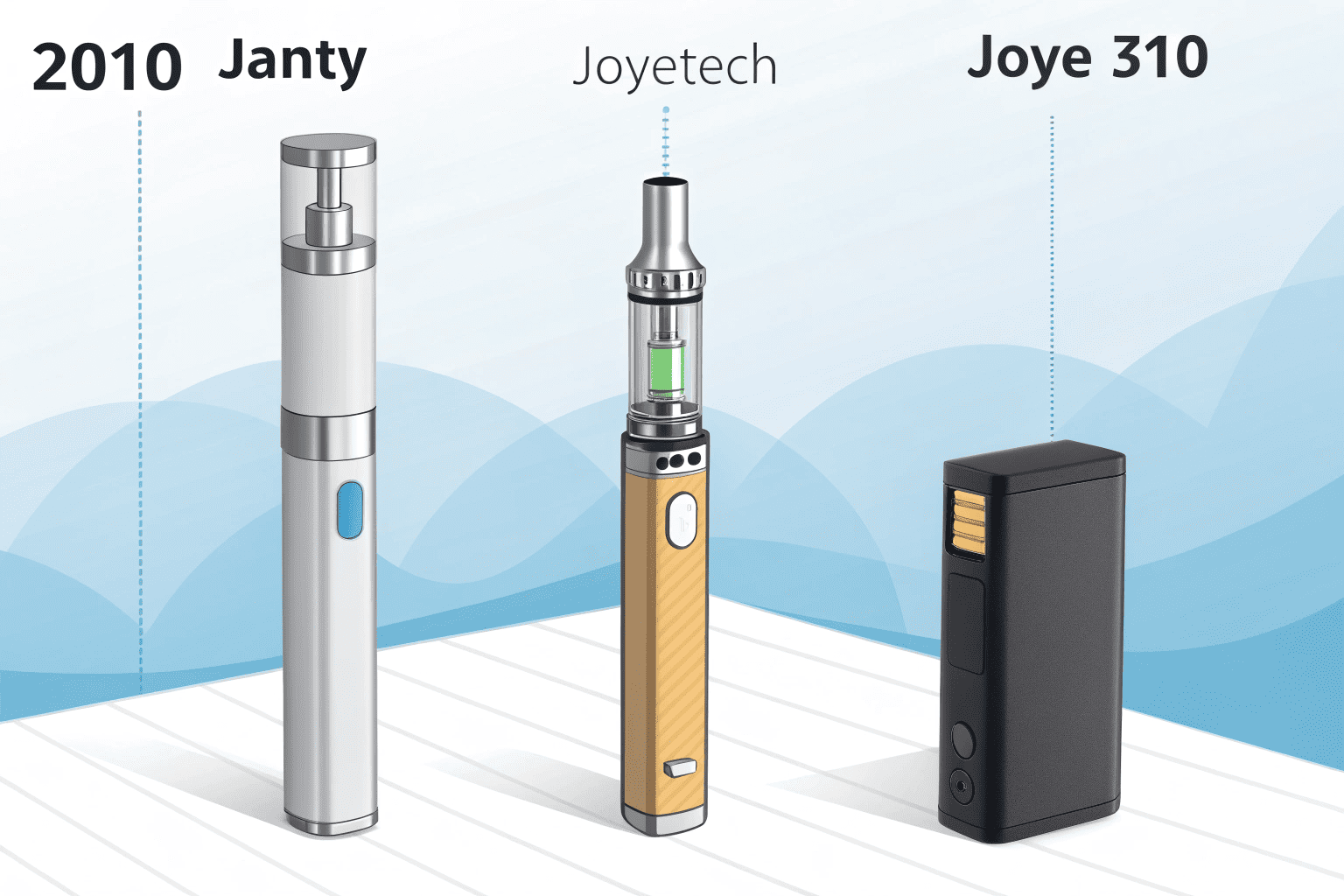
The vape pen was a game-changer. It was the first time the industry really moved away from trying to copy cigarettes. Instead, designers focused on creating a better user experience. The pen shape allowed for a much larger battery, which meant users could vape for a whole day instead of just a few hours.
Key Vape Pen Innovations
Vape pens introduced several features that are now standard in most vaping devices.
| Innovation | Description | Benefit to User |
|---|---|---|
| Larger Battery12 | More powerful and longer-lasting batteries (e.g., the eGo series). | All-day use without constant recharging. More satisfying vapor production. |
| Manual Button13 | Users pressed a button to activate the heating coil. | Gave the user direct control over when the device fired, preventing misfires and improving consistency. |
| Refillable Tanks14 | Clear tanks, known as "clearomizers," allowed users to pour in their own e-liquid9. | Huge cost savings and opened the door to a massive variety of e-liquid9 flavors from different brands. |
This shift to refillable vape pens is what truly allowed the e-liquid9 industry to explode. It created a more customizable and affordable way to vape, attracting a much wider audience and paving the way for the even more powerful mods that would follow.
Who designed the first vape?
We've talked about inventors and companies, but who actually designed the first vapes? The answer depends on which "first" you're talking about, as multiple people shaped the devices we use.
Hon Lik1 is credited with designing the first commercially viable e-cigarette in 2003. However, Herbert A. Gilbert5 designed the first smokeless, non-tobacco cigarette prototype in 1963, and Joseph Robinson3 designed the very first concept for an electric vaporizer2 in 1927.
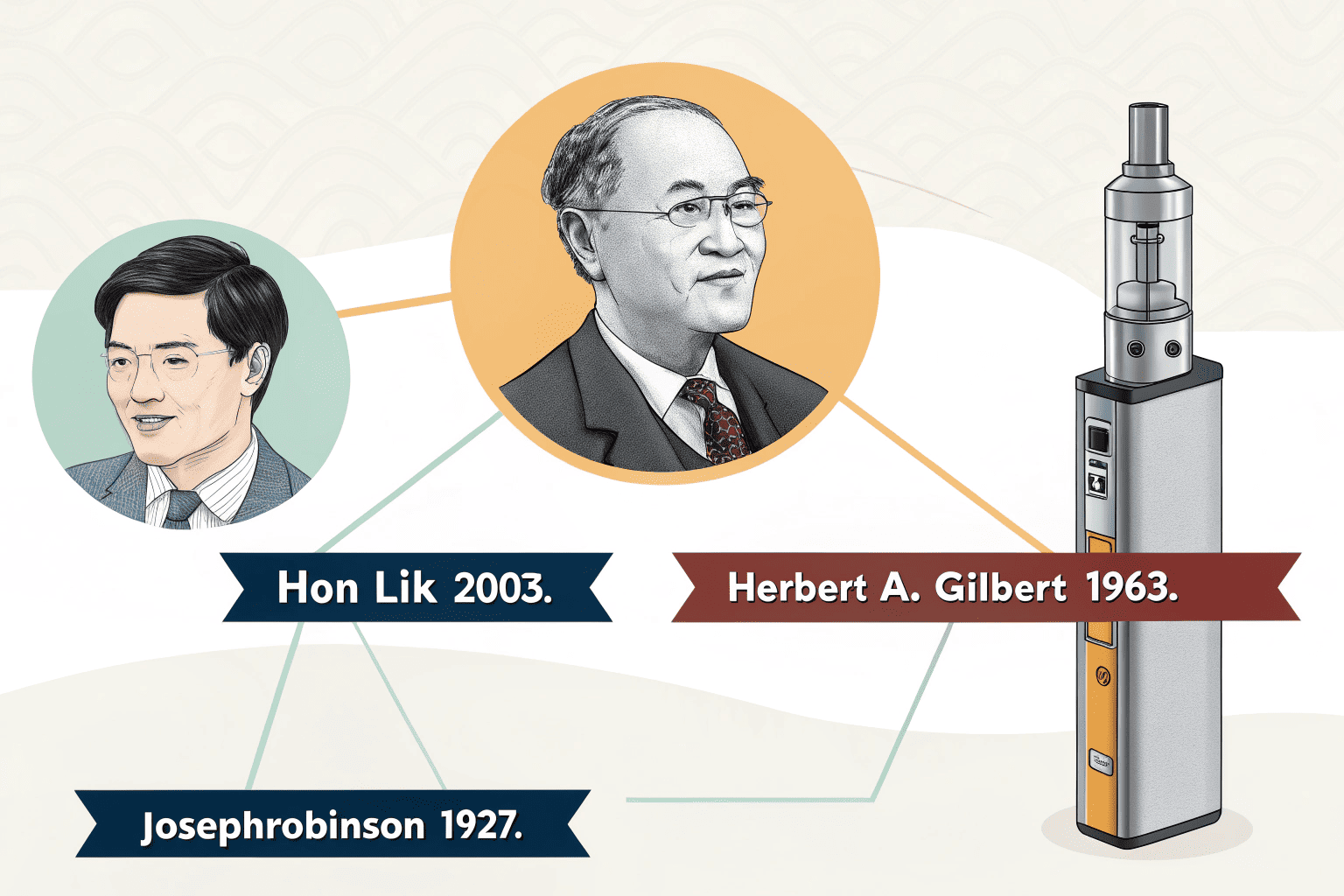
Design is about more than just the final product; it's about the ideas and solutions that lead to it. In the history of vaping, there are three key designers who each solved a different part of the puzzle.
The Key Designers in Vaping History
-
Joseph Robinson3 (The Conceptual Designer15): In 1927, he designed the concept. His patent laid out the fundamental idea of using electricity to heat a substance to create an inhalable vapor. He was the architect who drew the first blueprint, even though his building was never constructed. His design established the core principle of vaporization without combustion.
-
Herbert A. Gilbert5 (The Prototype Designer16): In the 1960s, Gilbert took the concept and built a real, working prototype. He designed a device that could actually produce a flavored vapor without burning anything. He was the engineer who proved the blueprint could work. His design introduced the idea of a handheld, cigarette-like device for recreational, flavored vapor.
-
Hon Lik1 (The Commercial Designer17): In 2003, Hon Lik1 designed the first product that could be successfully manufactured and sold to the masses. He figured out how to make it work reliably with nicotine, solving the final piece of the puzzle. He was the product designer who turned the a working prototype into a successful consumer product.
Who made the first disposable vape?
Disposable vapes are incredibly popular today for their simplicity. But where did this idea come from? It's a more recent innovation that changed the market once again.
The first widely popular disposable vape was the Puff Bar18, which launched around 2019. However, the underlying technology was developed earlier with cig-a-likes and early all-in-one devices. Puff Bar18 perfected the formula with a sleek design, strong flavors, and high nicotine content.
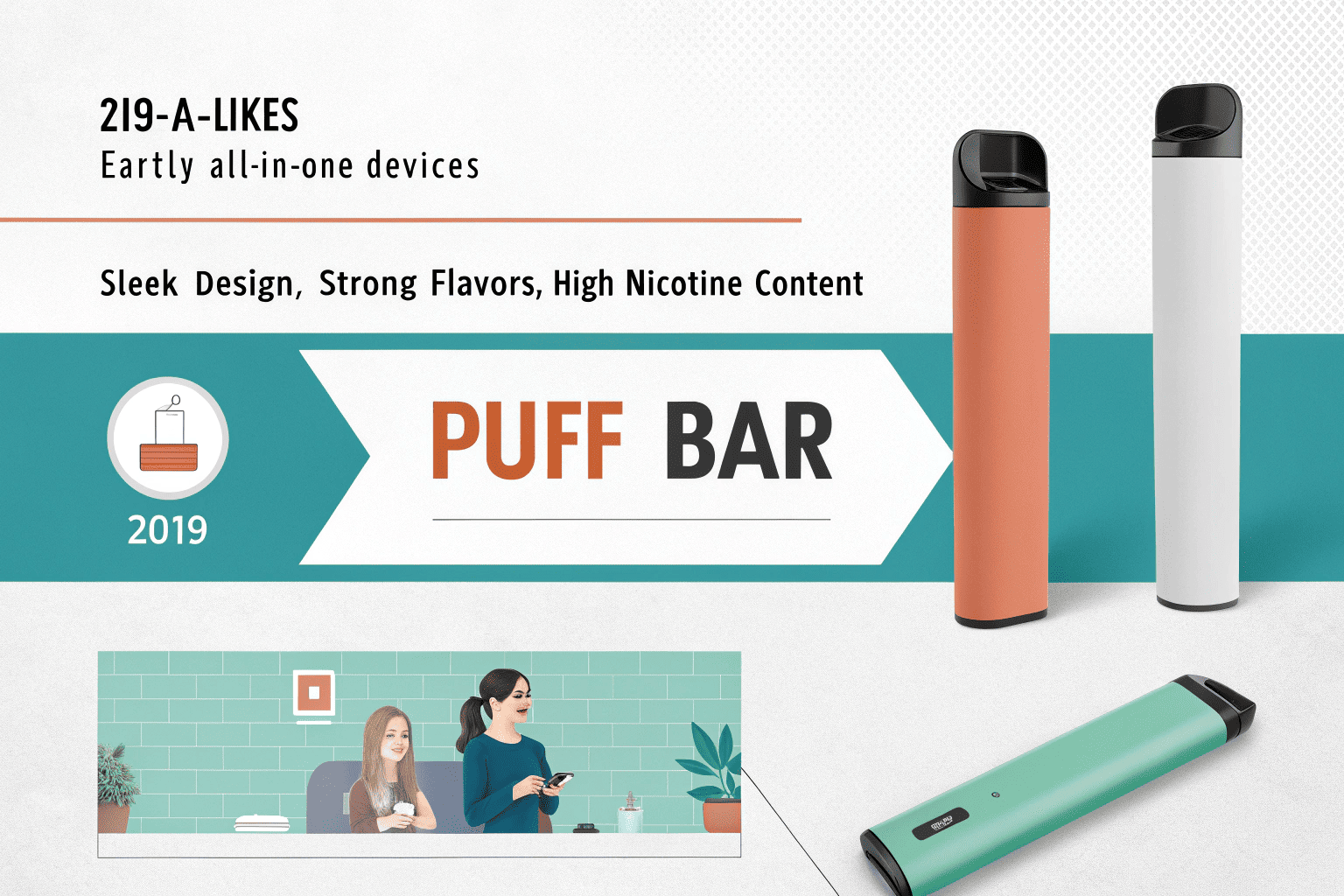
The idea of a disposable vape isn't entirely new. The early cig-a-likes with their disposable cartomizer10s were, in a way, partially disposable. But the fully disposable, all-in-one device that you use and then throw away is a more modern phenomenon. Before Puff Bar18, there were other companies experimenting with the format, but none managed to capture the market in the same way.
The Rise of Modern Disposables
Puff Bar18's success came from getting a few things just right.
- Simplicity: There were no buttons, no charging, and no refilling. You just opened the package and started using it. This made it incredibly easy for new users.
- Salt Nicotine19: They used nicotine salt e-liquid9, which allows for a high nicotine concentration (5%) without the harsh throat hit of traditional freebase nicotine. This delivered a more satisfying experience for smokers looking to switch.
- Flavor and Design: They offered a wide range of intense fruit flavors and came in bright, colorful, pocket-friendly designs. This strong branding made them highly appealing, especially to younger adult consumers.
Puff Bar18 created the template that hundreds of other brands, like Elf Bar and Geek Bar, would follow. It proved there was a huge market for ultimate convenience.
Who made the first nicotine vape20?
While we've discussed early vaporizers, the specific addition of nicotine was the key to making vapes a true alternative to cigarettes. Who was the first to successfully vaporize nicotine?
Hon Lik1 created the first successful nicotine vape20 in 2003. While earlier inventors had concepts for vaporizers, Hon Lik1 was the first to design a device and a liquid solution (using propylene glycol) specifically to deliver nicotine effectively to the user.
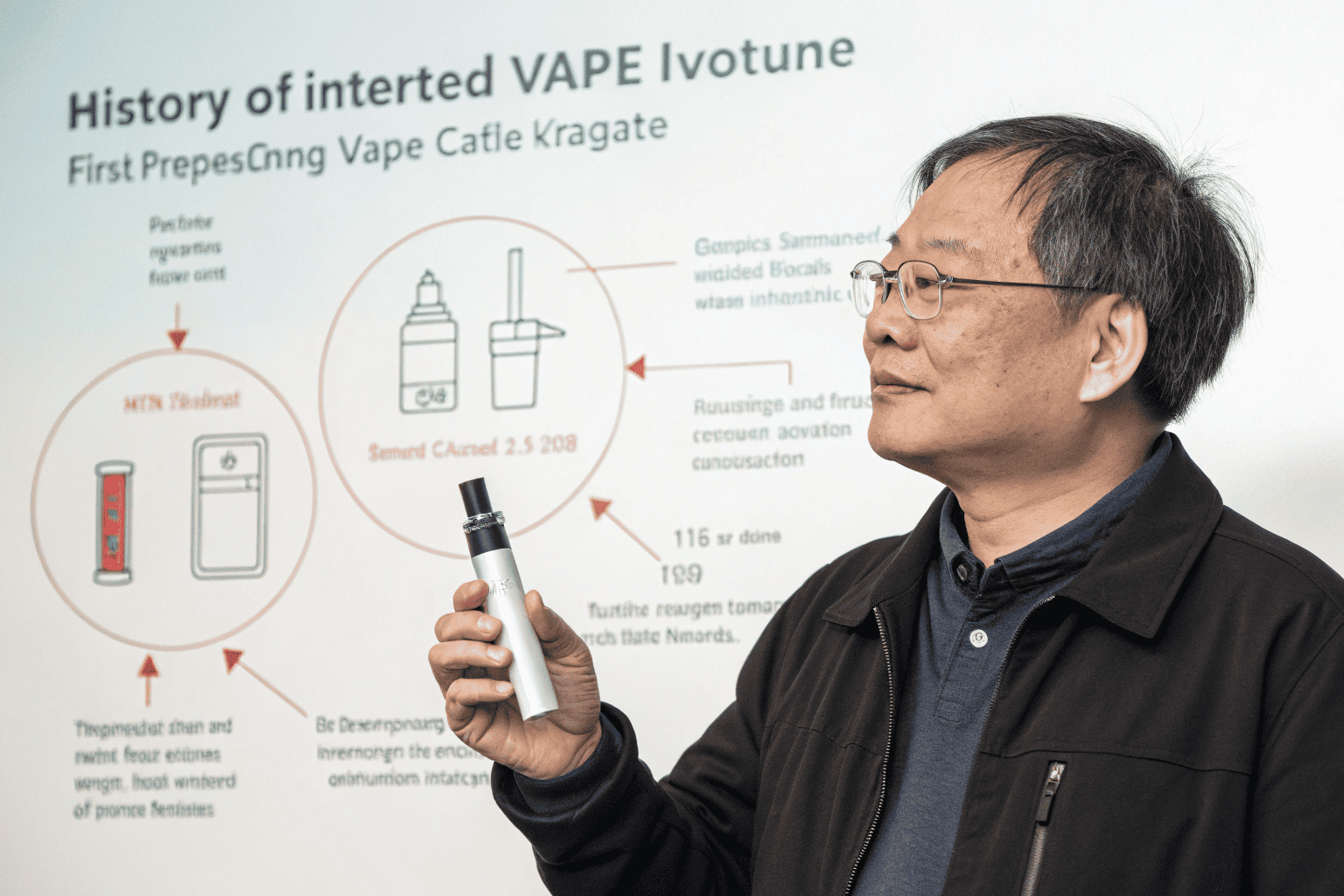
The challenge wasn't just creating vapor; it was creating a vapor that could carry nicotine and be absorbed by the body in a way that mimicked smoking. This is where Hon Lik1's background as a pharmacist was so important.
Solving the Nicotine Delivery Problem
Joseph Robinson3's 1927 patent was for medicinal compounds, and Herbert Gilbert's 1963 device was for flavored air. Neither focused on nicotine. Hon Lik1's goal was different from the start: he wanted to replace smoking. To do this, he had to figure out how to suspend nicotine in a liquid that could be vaporized safely and efficiently.
He chose propylene glycol (PG) as the base for his e-liquid9. PG is a common food additive and is very effective at carrying both flavor and nicotine. It also provides the "throat hit" that smokers are used to. By dissolving nicotine in PG, he created the first true e-liquid9. This combination of a working device and a nicotine-based liquid was the magic formula that launched the entire industry. Every nicotine vape20 today, from a small pod to a large mod, is a direct descendant of Hon Lik1's original invention.
Who made the first weed vape?
The technology of vaping wasn't limited to nicotine for long. The idea of heating a substance without burning it was a perfect fit for cannabis, and a new category of vapes was born.
The first popular weed vape was the Volcano Vaporizer21, a desktop unit released in 2000 by Storz & Bickel. For portable devices, the "Magic-Flight Launch Box22," released in 2009, was one of the first popular and simple vapes for dry herb.
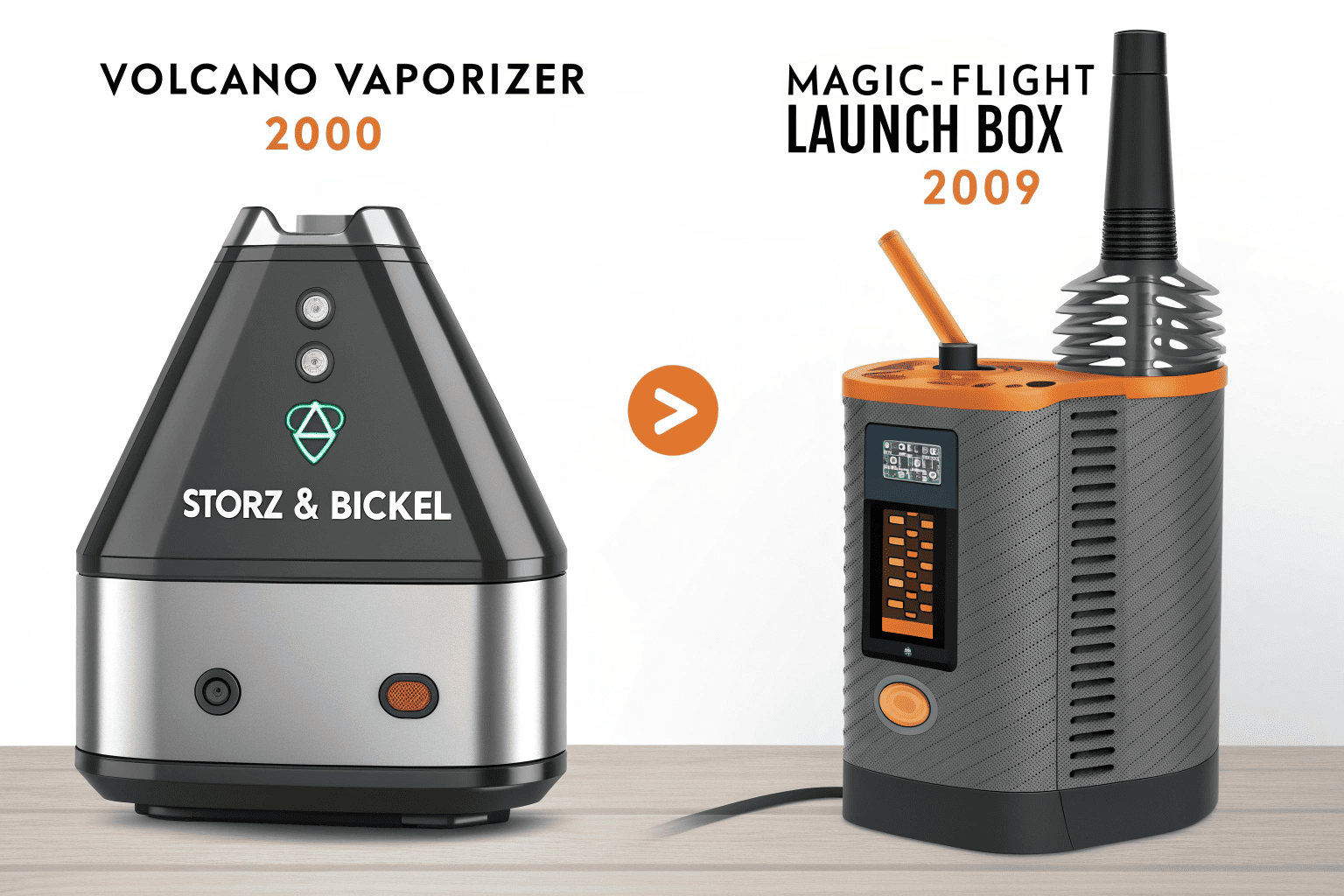
Vaping cannabis started with large, stationary devices. The Volcano, invented by Markus Storz in Germany, is a true icon in this space. It's famous for its "balloon system." The device heats up cannabis flower (dry herb) to a precise temperature, and a fan fills a large bag with pure, flavorful vapor. The user then detaches the bag and inhales from it. It set the standard for quality and is still considered one of the best desktop vaporizers today.
The Move to Portability
While the Volcano was amazing, you couldn't exactly carry it around in your pocket. The demand for portable dry herb vaporizers grew, leading to innovative new products.
- Magic-Flight Launch Box22 (2009): This was a small, beautifully crafted wooden box that was simple and effective. It used a rechargeable battery that you pushed in to heat the small chamber of herb. It became a cult classic for its simplicity and unique design.
- PAX (2012): The first PAX vaporizer23, from PAX Labs, is often called the "iPod of vapes." It brought a new level of sleek, high-tech design and user-friendliness to the portable market. It was small, stylish, and easy to use, which helped bring cannabis vaping into the mainstream.
Who made the first THC vape?
While dry herb vapes were growing in popularity, another innovation was happening: extracting the THC into a concentrated oil that could be vaped even more discreetly.
The first THC vape pen24s, using disposable cartridges with THC oil, began appearing in the early 2010s. The invention of the "510 thread" battery and cartridge system standardized the technology, allowing many different companies in emerging legal cannabis markets to produce compatible products.
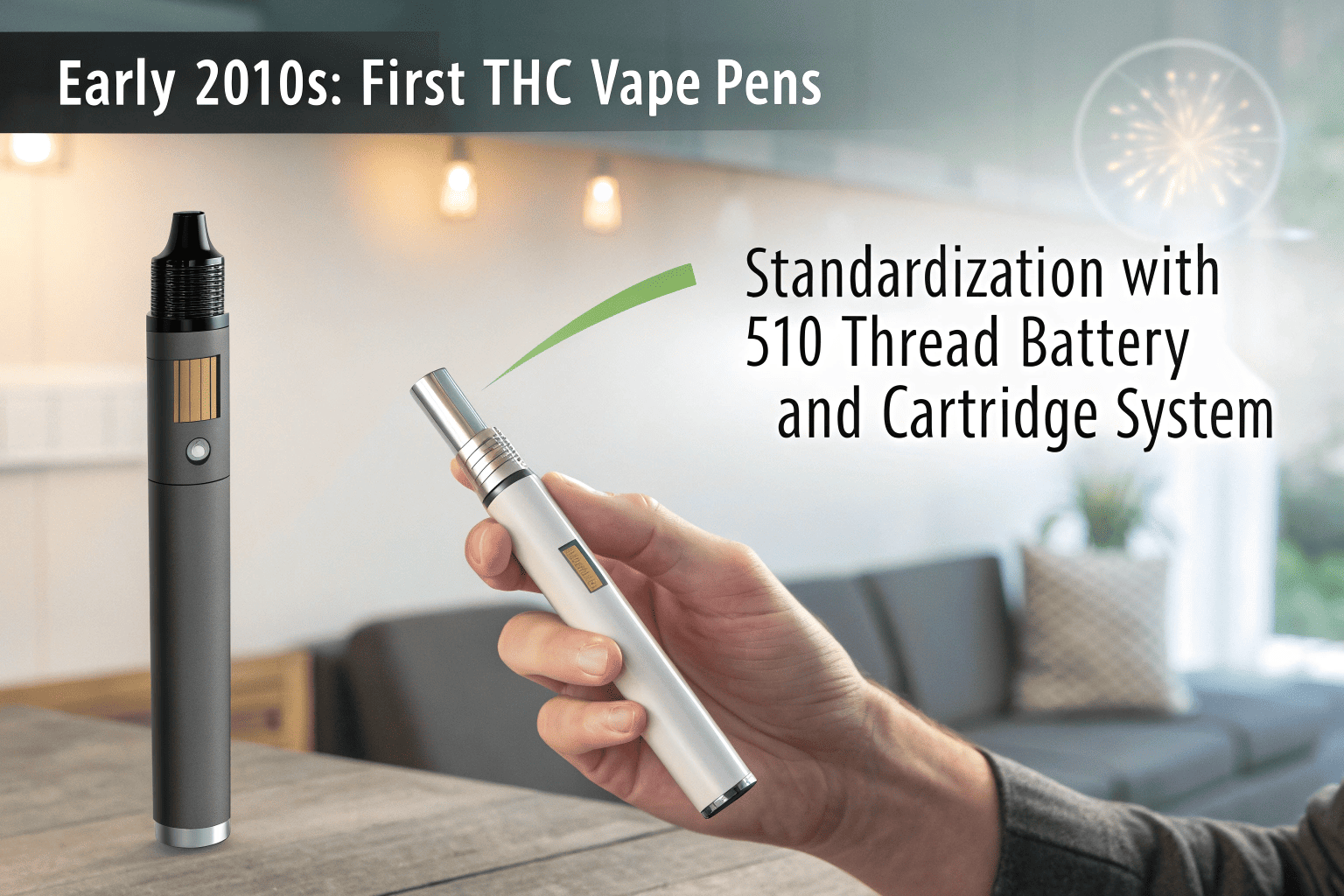
The development of the THC vape pen24 is closely tied to the history of the e-cigarette vape pen. The same core technology was adapted for a new purpose. Innovators in the cannabis space realized that the heating coils and batteries from nicotine vape pens could also be used to vaporize thick THC distillate.
The 510 Thread Revolution
The real breakthrough for THC vapes was the standardization of the connection between the battery and the cartridge. This connection is called the "510 thread" (referring to the 10 threads at 5 mm per thread). This simple standard meant that:
- Batteries and cartridges became interchangeable. A customer could buy a battery from one brand and a THC cartridge from another, and they would work together perfectly.
- It created a huge, open market. Many new companies could enter the space by focusing on just making great THC oil and filling it into standard cartridges.
This development made THC vaping incredibly accessible and convenient. Just like with nicotine vapes, the focus was on user-friendliness. The pre-filled, disposable cartridge became the dominant way for people to consume THC concentrate, and it remains the most popular format today.
Conclusion
From a simple patent in 1927 to the global industry we see today, the vape was made by a series of innovators. Hon Lik's commercial design was the critical turning point.
-
Understand how Hon Lik’s invention in 2003 transformed vaping into a worldwide phenomenon. ↩ ↩ ↩ ↩ ↩ ↩ ↩ ↩ ↩ ↩ ↩ ↩ ↩
-
Learn how the early concept of an electric vaporizer paved the way for e-cigarettes decades later. ↩ ↩ ↩
-
Discover the pioneering inventor who filed the first vape-related patent, setting the foundation for modern vaporization devices. ↩ ↩ ↩ ↩ ↩ ↩
-
Learn how BAE Vapor merges deep industry experience with cutting-edge design and manufacturing to help brands innovate in the vaping market. ↩
-
Explore how Gilbert’s smokeless cigarette prototype revolutionized the idea of tobacco-free inhalation. ↩ ↩ ↩
-
See how this 1963 innovation introduced the first functional vapor production without combustion. ↩
-
Find out about the company that backed Hon Lik’s invention and turned it into a global business success. ↩
-
Discover Ruyan—the first commercially sold vape that represented the birth of the vaping industry. ↩ ↩ ↩
-
Discover what e-liquid is made of and why it’s vital for vaporizing nicotine and flavors effectively. ↩ ↩ ↩ ↩ ↩ ↩ ↩
-
Learn how combining atomizer and cartridge into one piece made vaping simpler and more reliable. ↩ ↩
-
Explore how the Joye 510 defined standards for performance and battery life in modern vape pens. ↩
-
See how higher capacity batteries revolutionized all-day vaping and user satisfaction. ↩
-
Understand why manual controls improved reliability and gave users better control of their vaping experience. ↩
-
Discover how refillable tanks transformed vaping by enabling flavor diversity and cost savings for users. ↩
-
Learn how Joseph Robinson’s design introduced the idea of vaporization without combustion. ↩
-
Explore Herbert Gilbert’s achievement in building the first functional prototype that produced flavored vapor. ↩
-
Find out how Hon Lik developed the first mass-manufactured, viable e-cigarette product for global use. ↩
-
See how Puff Bar’s design, flavor, and nicotine innovation made it a market leader in disposables. ↩ ↩ ↩ ↩ ↩
-
Understand how salt nicotine allowed vapers to experience smoother, higher nicotine levels efficiently. ↩
-
Explore how Hon Lik’s nicotine vape invention provided smokers with a safer, efficient alternative to cigarettes. ↩ ↩ ↩
-
Learn why the Volcano Vaporizer set the gold standard for vape technology and continues to influence modern desktop cannabis vapes. ↩
-
Discover how the Magic-Flight Launch Box redefined portable vaping with its wooden design, simplicity, and loyal community. ↩ ↩
-
See how the PAX vaporizer brought sleek design and innovation to vaping, earning its reputation as the 'iPod of vapes.' ↩
-
Understand the origins of the THC vape pen and how its design adapted e-cig technology for discreet cannabis consumption. ↩ ↩