You're ready to sell vapes and start your business, but the maze of legal requirements is confusing. The fear of missing a single form could shut you down.
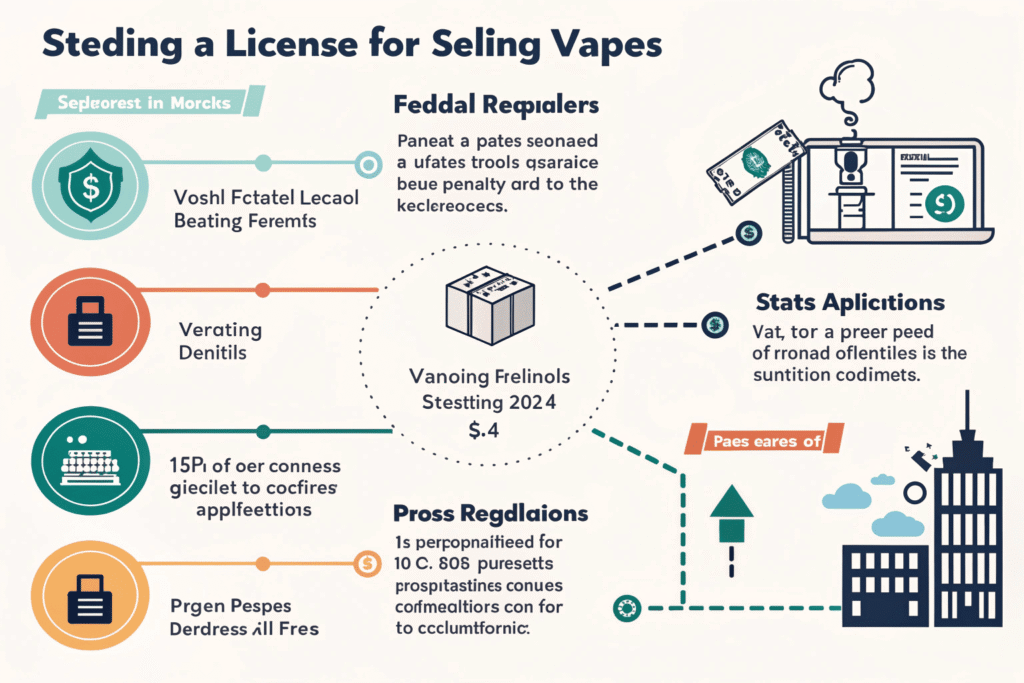
To get a license to sell vapes, you must identify the required federal, state, and local permits1 for your area. The process involves submitting applications, providing business details, paying fees2, and proving compliance with all regulations3.
From my first day as a salesman in this industry, I’ve seen that the businesses that last are the ones that get the legal stuff right from the start. I’ve talked to far too many entrepreneurs who were passionate about their product but had their dreams crushed by fines or shutdowns because they overlooked a single permit. This is why I stress compliance above all else. My client Mike learned this the hard way before we partnered up. Now, his business is thriving because he has a solid legal foundation. Let's make sure you build one too.
Do You Have to Have a License to Sell Vapes?
You might think about skipping the licensing process to save time and money. But the risk of getting caught could mean huge fines and the end of your business.
Yes, you absolutely must have a license to sell vapes. It is illegal to sell vape and nicotine products in almost every jurisdiction without the proper federal, state, and local licenses4. This is not optional.
Let me be perfectly clear: trying to sell vapes "under the table" is the fastest way to end your business career. Governing bodies at every level regulate vape products to ensure public health5, enforce age restrictions, and collect taxes. These aren't just suggestions; they are laws with serious consequences. Unlike selling t-shirts, selling regulated products like vapes puts you under a microscope. Fines can be in the tens of thousands of dollars, your inventory can be seized, and you could be banned from ever getting a license in the future. "I didn't know" is never a valid legal defense. Building a legitimate, long-term business means following the rules from day one.
Why Licensing is Non-Negotiable
| Reason | Why It Matters to Regulators | Your Responsibility as a Business Owner |
|---|---|---|
| Public Health | To control product standards and ingredients. | Sell only compliant, tested products. |
| Age Verification6 | To prevent sales to minors. | Implement and enforce strict age-checking policies. |
| Taxation7 | To collect excise and sales taxes. | Register for tax permits and file correctly. |
| Accountability8 | To know who is selling products in their jurisdiction. | Operate transparently and maintain good records. |
How Do I Get a Vape Licence?
You're ready to get licensed, but the process looks like a bureaucratic nightmare. The forms, agencies, and confusing terms can make you want to give up.
To get a vape license, first research the specific permits needed at the federal, state, and local levels. Then, gather your documents, complete the application forms accurately, pay all fees, and submit your packet.
Getting your license is a step-by-step process. Don't get overwhelmed. Start by going to the official government websites9 for your country's main regulator (like the FDA in the US), your state's tax or comptroller office, and your local city or county clerk's office. They will have checklists and the actual forms you need. You'll generally need your official business registration documents, federal tax ID (like an EIN)10, and personal information for all owners. Fill out every single line on the applications. A blank space can cause your application to be rejected, leading to long delays. I strongly recommend having a compliance expert or lawyer11 review your applications before you submit them. It’s a small investment to avoid huge headaches.
How Much Does It Cost to Get a License to Sell Vapes?
You need to budget for your business, but you have no idea what licensing will cost. You are worried about hidden fees blowing out your startup budget.
The cost for a vape license can range from under $100 for a simple local permit to many thousands of dollars for multiple licenses, legal fees, and product compliance costs. This varies greatly by location.
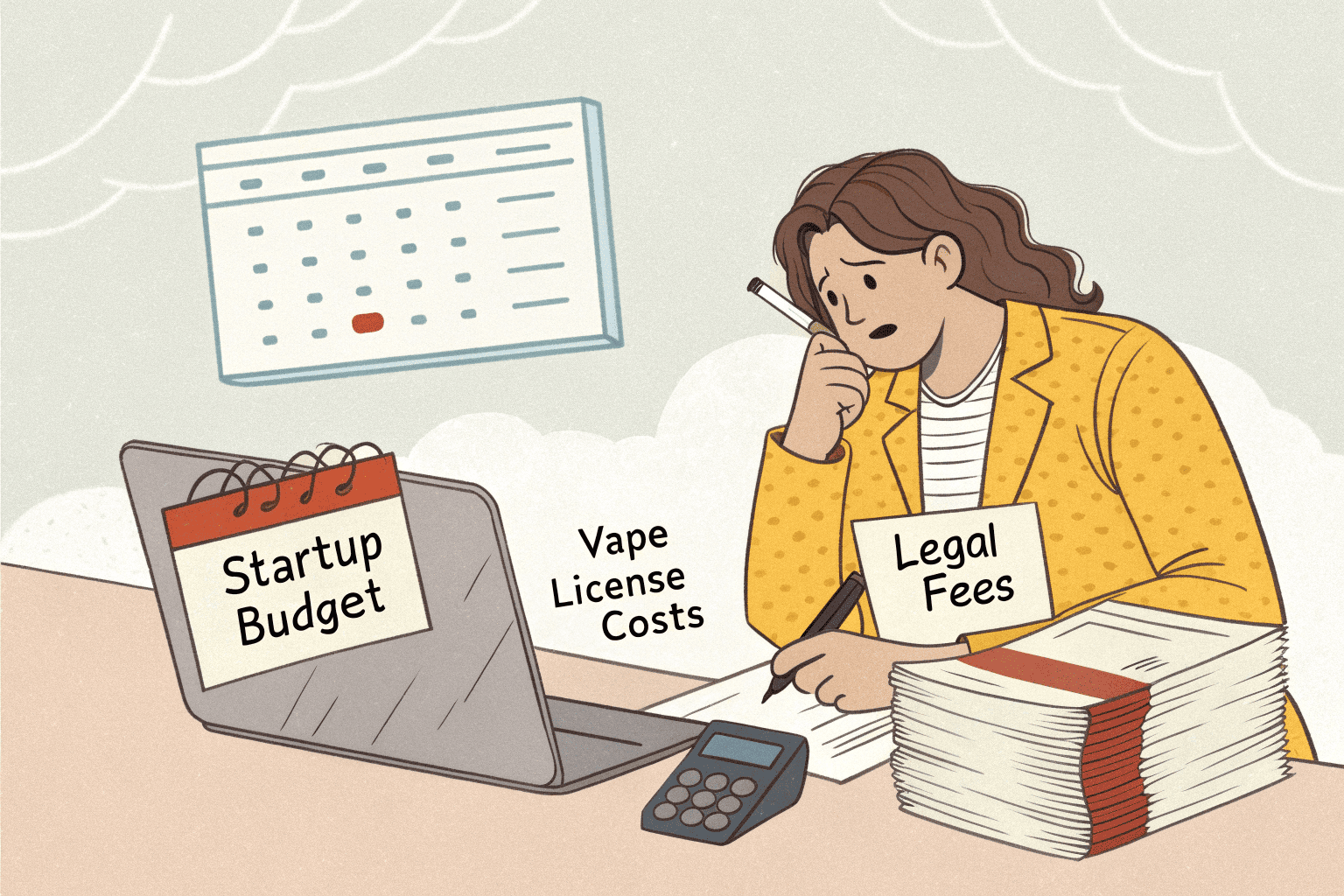
There is no single price tag. The cost is a stack of different fees. You'll have the direct application fees for each license you apply for. These could be small, like a $50 city permit, or much larger, like a state distributor license that costs over $1,000. Don't forget that most licenses have annual renewal fees12. The biggest potential cost, however, is often not the fee itself, but the professional help you hire. A good lawyer or compliance consultant might cost a few thousand dollars, but they can save you ten times that amount by helping you avoid mistakes, delays, and fines. If you are manufacturing or importing your own unique product, you also need to budget for potential lab testing and compliance verification fees13, which can be significant.
How Do I Get a Vape Wholesale License?
You want to scale up from a single shop to become a distributor for other retailers. But you know the rules for wholesale are much stricter and more complex.
A vape wholesale license14 involves a separate, more rigorous application process. You must register as a distributor, handle B2B sales records, and often manage state excise tax collection15 and tax stamping requirements.
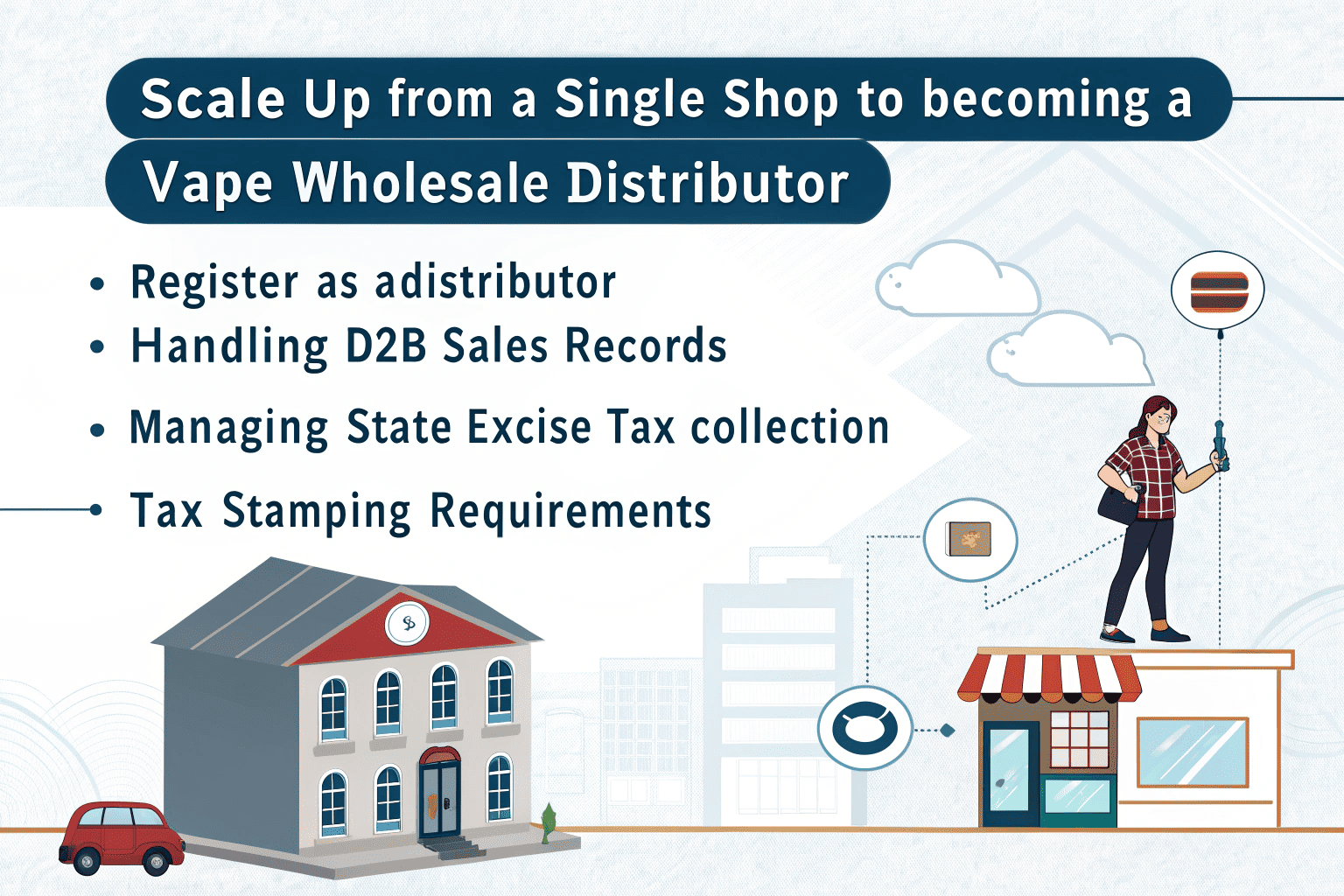
Moving into wholesale means you are entering a different part of the supply chain with much greater responsibility. Regulators hold distributors to a higher standard because they are a key link between manufacturers and retailers. You will likely need a specific "Tobacco/Vape Products Distributor License16" from your state, which is separate from a retail license. This license gives you the authority to purchase products tax-free from manufacturers and then collect and remit the appropriate excise taxes when you sell to retailers. Your record-keeping requirements will be intense. You must track every single product from the moment you receive it to the moment you sell it, including the license information of the retailers you sell to. It's a complex operation, but it's the key to scaling your business into a larger enterprise.
What License Do I Need to Open a Vape Shop?
You've found the perfect location for your vape shop. But what specific pieces of paper do you actually need to legally open your doors and start selling?
To open a vape shop, you typically need a layered set of licenses: a state-level Tobacco/Vape Retail License, a local Business Operating Permit17, and a Sales & Use Tax Permit18. The exact names vary by location.
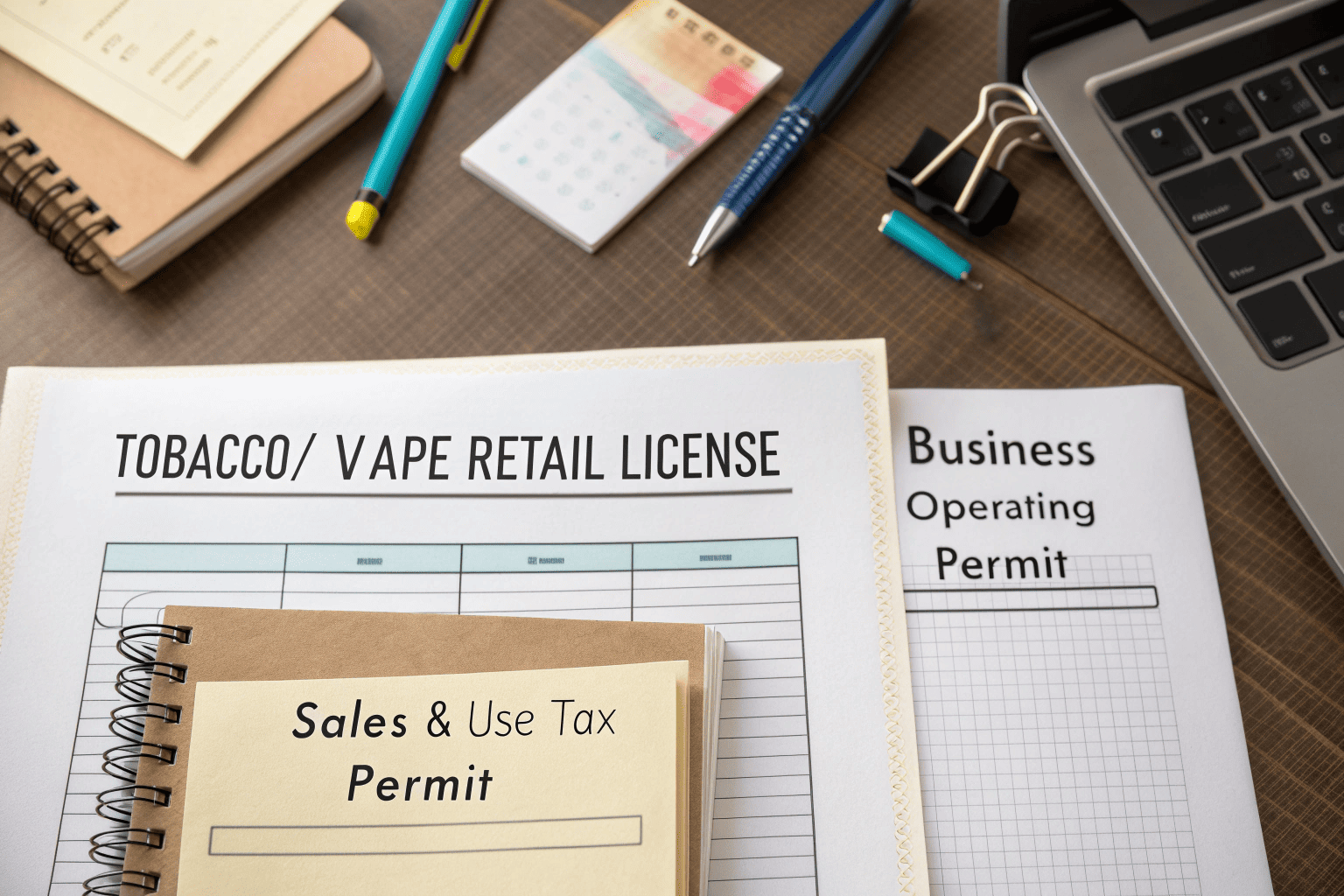
Think of your licensing as a pyramid. The base of the pyramid is your local licensing. That includes a general Business Permit from your city or county and a Sales Tax Permit that allows you to collect sales tax. You also need to ensure your location is zoned for commercial retail. The next level up is your state-specific license. This is the most critical one for selling vapes, often called a "Tobacco Product Retailer License" or something similar. This is the main permit that gives you the legal authority to sell vape products in your state. The top of the pyramid is federal compliance, which includes following all FDA rules, like enforcing the age 21 minimum and only selling products that have been authorized for sale by the FDA. You must have all pieces in place before you can legally operate.
Common License Checklist for a Vape Shop
| License Type | Issuing Authority | Purpose |
|---|---|---|
| Retail Vape License | State Agency | Authorizes the sale of vape products to consumers. |
| Sales Tax Permit | State Agency | Allows you to collect and remit sales tax. |
| Business License/Permit | City or County | Authorizes general business operation in the area. |
| Federal Compliance | FDA (in US) | Enforce age 21, sell authorized products. |
Conclusion
Getting licensed is the first, most critical step to building a legitimate vape business. Navigate the process carefully, do your research, and always prioritize compliance to ensure your long-term success.
-
Understanding the specific permits for your area ensures your vape business operates legally and avoids costly shutdowns. ↩
-
Knowing all related fees helps you budget successfully and avoid surprise costs that impact your business startup. ↩
-
Regulatory compliance protects your business from fines and builds customer trust in your brand's legitimacy. ↩
-
These levels of licensing protect public health and ensure your business meets all legal obligations. ↩
-
Learning about public health standards helps you understand why regulations exist and how compliance safeguards consumers. ↩
-
Implementing proper age verification systems ensures legal sales and prevents severe penalties for underage transactions. ↩
-
Understanding taxes helps vape businesses maintain financial compliance and properly handle excise and sales tax duties. ↩
-
Accountability builds trust with regulators and customers, helping your business maintain transparent, legal operations. ↩
-
Accessing verified government sources ensures accuracy in your licensing process and prevents misinformation. ↩
-
Acquiring a federal EIN is essential for tax filing and legal identification of your vape enterprise. ↩
-
Hiring professionals ensures your legal documents meet all regulatory requirements, saving time and avoiding costly mistakes. ↩
-
Planning for renewal fees keeps your business legally active and prevents interruptions due to expired licenses. ↩
-
Lab testing ensures your products meet safety standards and stay clear of penalties or bans for noncompliance. ↩
-
Getting a wholesale license allows your business to grow into distribution and meet all required tax obligations. ↩
-
Understanding excise tax collection helps you fulfill your legal duties and maintain transparent business finances. ↩
-
Applying for this license grants you the authority to sell at scale and legally manage wholesale operations. ↩
-
Acquiring this permit authorizes your business to operate legally within your city or county jurisdiction. ↩
-
This permit allows legal collection of taxes from customers and ensures compliance with state revenue laws. ↩