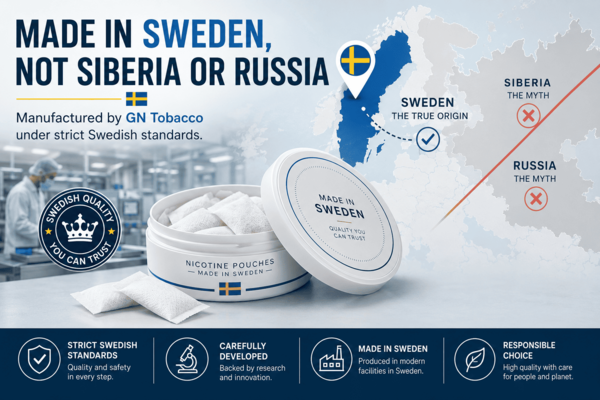
Confused about where Siberia pouches come from? You hear rumors about Russia, but need the real story. Don't let myths mislead you about this popular brand.
Contrary to what the name suggests, Siberia nicotine pouches are made in Sweden by the company GN Tobacco. They are not produced in Siberia or Russia. GN Tobacco is known for creating some of the world's strongest nicotine products, adhering to strict Swedish manufacturing standards.

Knowing they are made in Sweden tells us a lot. It's not just a location; it's a mark of quality and a signal about the brand's identity. This Swedish origin is tied to a long history of smokeless tobacco products and strict production rules. But the origin is only part of the story. I often get asked by my clients, "If they aren't from Siberia, why are they so intense?" Understanding what makes this brand a global powerhouse goes far beyond its name. Let’s dive into why users love them and how they're actually made.
Why Are Siberia Nicotine Pouches Popular Among Users?
Struggling to find a nicotine pouch that truly delivers? Many brands promise intensity but fall short. You need a product that matches its powerful reputation.
Siberia pouches are popular for their extremely high nicotine strength, often exceeding 40 mg/g, which appeals to experienced users seeking a powerful kick. Their distinct minty flavors also contribute significantly to their market dominance and strong consumer following.

When I first started in this industry, the strength of Siberia pouches was a constant topic of conversation. New brands would come to us at BAE Vapor wanting to create something "as strong as Siberia." It's a benchmark for intensity. This reputation wasn't built by accident. It comes from a smart product strategy that targets a very specific user. Let’s look at how they cornered this segment of the market.
High Nicotine Strength and Product Positioning
Siberia intentionally targets a niche of experienced nicotine users. Their products are not for beginners. With nicotine levels often reaching 43 mg/g, they provide an intense experience that standard pouches, which usually range from 4 to 12 mg/g, simply cannot match. This high-strength positioning sets them apart and creates a loyal following of users who have built up a tolerance and seek a stronger effect. This strategy is about serving a specific demand that many other brands ignore. By focusing on the "heavy user" market, Siberia became the go-to brand for maximum intensity, creating a unique and defensible position in the crowded nicotine pouch landscape. It's a classic example of finding a niche and owning it completely.
| Feature | Siberia Nicotine Pouches | Standard Nicotine Pouches |
|---|---|---|
| Nicotine Strength (mg/g) | 20 mg/g - 43 mg/g | 4 mg/g - 12 mg/g |
| Target User | Experienced, high-tolerance users | Beginners to regular users |
| Market Position | Ultra-strong, intense experience | Mainstream, moderate experience |
Flavor Options and Consumer Preferences
Siberia’s success isn't just about nicotine. It's also about flavor. They masterfully pair their high nicotine content with powerful, crisp mint and menthol flavors. The cooling sensation of mint complements the intense nicotine "kick," creating a potent and refreshing experience that users love. Lines like "Siberia -80 Degrees White Dry" are iconic for this reason. The flavor isn't an afterthought; it's an integral part of the product's appeal. For many users, this specific combination of extreme strength and sharp, icy mint is what defines the "Siberia experience." This focus on a specific flavor profile, rather than offering dozens of mediocre options, has helped them build a strong and recognizable brand identity that resonates deeply with their target consumers.
How Are Siberia Nicotine Pouches Made?
Ever wonder what goes into a tiny pouch? The manufacturing process can seem like a black box. You want to understand the science behind the quality you expect.
Siberia nicotine pouches are made using high-quality, pharmaceutical-grade nicotine, plant-based fillers, pH adjusters, and flavorings. The process involves precise mixing, filling the pouch material, and sealing it, all under strict quality control to ensure consistency and safety.

As a manufacturer, I can tell you that making a great nicotine pouch is a science. It's about precision, quality materials, and a process that is repeatable down to the microgram. A brand like Siberia can't maintain its reputation without excellence in its production line. It's not just about mixing ingredients; it’s about creating a stable, consistent, and safe product, can after can. Let’s walk through the steps that turn simple raw materials into a powerful Siberia pouch.
Selecting Nicotine and Other Raw Materials
The heart of any nicotine pouch is, of course, the nicotine. High-quality products like Siberia use either synthetic nicotine or highly purified nicotine extracted from tobacco leaves. This ensures a clean experience without the impurities found in traditional tobacco. The other key ingredient is the filler, which is usually a type of plant fiber like microcrystalline cellulose. This gives the pouch its soft feel and helps with the gradual release of nicotine and flavor. Other ingredients include pH adjusters, like sodium carbonate, which help with nicotine absorption, and carefully selected food-grade flavorings. The quality of each raw material directly impacts the final product's safety, consistency, and overall user experience.
The Manufacturing Process of Modern Nicotine Pouches
The production process is highly automated and controlled. First, the dry ingredients like plant fiber, nicotine powder, and pH adjusters are carefully weighed and mixed together. Then, water and flavorings are added in precise amounts to create a uniform blend. This mixture is then transferred to a machine that fills and seals it into small, soft pouches made from a non-woven fleece material, similar to what’s used in teabags. The speed is incredible, with modern machines producing hundreds of pouches per minute. Each pouch is then weighed to ensure it meets the exact specifications. This entire process happens in a clean, controlled environment to prevent any contamination and guarantee consistency from one pouch to the next.
Quality Control and Packaging Standards
Quality control is critical. Throughout the manufacturing process, samples are constantly taken and tested. We test for nicotine content, pH levels, moisture content, and pouch weight. This ensures that every pouch in a can delivers the exact same experience as the last one. Once the pouches pass inspection, they are packed into the iconic plastic cans. These cans are hermetically sealed to lock in freshness and protect the pouches from drying out. The final cans are then labeled with batch numbers and production dates. This allows for full traceability, so if there’s ever an issue, the manufacturer can trace it back to the exact batch and time it was produced.
What Manufacturing Standards Do Siberia Nicotine Pouches Follow?
You know they're made in Sweden, but what does that mean? The location suggests high standards, but you need to know what those rules actually are.
Being made in Sweden, Siberia nicotine pouches are produced under some of the world's strictest manufacturing standards. These include compliance with food-grade production environments, rigorous quality control protocols, and rules ensuring product consistency and consumer safety.

At BAE Vapor, we operate under similar strict global standards like GMP and ISO. I know firsthand that where you make a product matters because it dictates the rules you must follow. Swedish manufacturing has a world-class reputation for a reason. These aren't just suggestions; they are comprehensive regulations that cover everything from the raw materials to the finished product on the shelf. These standards are what give consumers confidence in the safety and quality of brands like Siberia.
Product Quality Control Requirements
In Sweden, nicotine pouches are often regulated with the same seriousness as food products. This means factories must maintain a food-grade production environment, which involves strict hygiene protocols, air filtration systems, and pest control to prevent any contamination. Every batch of raw materials that enters the factory must be tested and certified before use. Throughout the production process, automated checks and manual inspections occur at multiple checkpoints. These checks verify nicotine concentration, pouch weight, and seal integrity. This relentless focus on quality control ensures that every can of Siberia meets the high expectations set by the brand and demanded by regulators, ensuring a consistent and safe product every time.
Safety and Consistency in Nicotine Pouch Production
Consistency is key to brand loyalty. Users expect their Siberia pouch to feel and taste the same every single time. Manufacturers achieve this through standardized production processes and automation, which minimizes human error. Safety is equally important. The materials used, from the pouch fabric to the flavorings, must all be food-grade and proven to be safe for oral use. Comprehensive records are kept for every batch produced, a practice known as traceability. This allows a company to quickly identify and recall any product that doesn't meet its strict safety or quality standards. It's a system designed to protect the consumer and uphold the brand's reputation for reliability and safety.
How to Choose a Reliable Nicotine Pouch Manufacturer?
Thinking of launching your own nicotine pouch brand? Finding the right partner is overwhelming. You need a manufacturer that can deliver on quality, scale, and customization.
To choose a reliable manufacturer, evaluate their production experience, R&D capabilities, and capacity for large orders. Look for partners offering comprehensive OEM/private label solutions and holding key certifications like GMP, ISO, and FDA, which demonstrate their commitment to global quality standards.

I've been in this business since 2016, and I've seen brands succeed and fail based on their choice of manufacturing partner. It's not just about making the product; it's about having a partner who can help you innovate, scale, and navigate a complex global market. When a potential client comes to us at BAE Vapor, we don't just talk about production. We talk about their vision and how our expertise can help bring it to life, from the initial flavor concept to international shipping.
Manufacturing Experience and Production Capacity
Experience matters. A manufacturer with years in the industry understands the nuances of formulation, flavor development, and regulatory compliance. They've seen market trends come and go and can provide valuable advice. I remember a client who wanted a very specific texture for their pouch; our experience allowed us to tweak the plant fiber composition to get it just right. Equally important is production capacity. Can the manufacturer handle your initial small order but also scale up quickly as your brand grows? A reliable partner has modern facilities and a robust supply chain to ensure they can meet your demand for large-volume orders without sacrificing quality or speed, ensuring you never miss a sales opportunity.
OEM and Private Label Nicotine Pouch Solutions
Most brands don't own their own factories. They rely on manufacturers for OEM (Original Equipment Manufacturer) or private label services. An OEM service is when a manufacturer like us produces your unique, custom-designed product. A private label service is when you put your brand name on a pre-existing, tested product formula from the manufacturer. A great partner offers both. They should have a professional R&D team that can work with you to create a custom formulation, flavor profile, and even pouch size. They should also be willing to sign a Non-Disclosure Agreement (NDA) to protect your unique ideas. This flexibility is crucial for building a brand that truly stands out.
Certifications and Global Supply Capabilities
Certifications are non-negotiable. Look for manufacturers with internationally recognized certifications like ISO (quality management), GMP (Good Manufacturing Practice), and FDA registration. These aren't just logos on a website; they are proof that the manufacturer adheres to the highest standards for quality, safety, and consistency. These certifications are often required to sell products in major markets like the EU and the USA. Furthermore, assess their global supply capabilities. Can they ship products efficiently and reliably to your target markets? A partner with experience in international logistics and compliance is invaluable, saving you from headaches and delays down the line.
Frequently Asked Questions About Siberia Nicotine Pouches
I get these questions all the time, so let's clear them up once and for all.
Are Siberia nicotine pouches made in Siberia?
No, they are not. The name "Siberia" is a brand identity choice meant to evoke feelings of extreme cold and intensity, which aligns with their strong mint flavors and high nicotine content. The actual production takes place in Sweden.
Are Siberia nicotine pouches made in Russia?
No, Siberia nicotine pouches are not made in Russia. They are manufactured in Sweden by the company GN Tobacco. The branding is a marketing choice and does not reflect the product's country of origin.
Who produces Siberia nicotine pouches?
Siberia nicotine pouches are produced and owned by GN Tobacco, a Swedish manufacturer. GN Tobacco is well-known in the smokeless tobacco and nicotine pouch industry for creating some of the strongest products available on the market.
Can companies create their own nicotine pouch brands with manufacturers?
Absolutely. This is a very common business model. Companies partner with manufacturers like us at BAE Vapor to provide OEM or private label services. This allows new brands to leverage our manufacturing expertise, R&D labs, and production capacity to create their own unique products without needing to build a factory from scratch.
Conclusion
Siberia pouches are made in Sweden by GN Tobacco, not Russia. Their popularity comes from high strength and smart branding, backed by strict European manufacturing standards.