You hear that nicotine pouches are "good," but are they really? Choosing a nicotine product without the full story can be a risky move. I'll give you the honest breakdown.
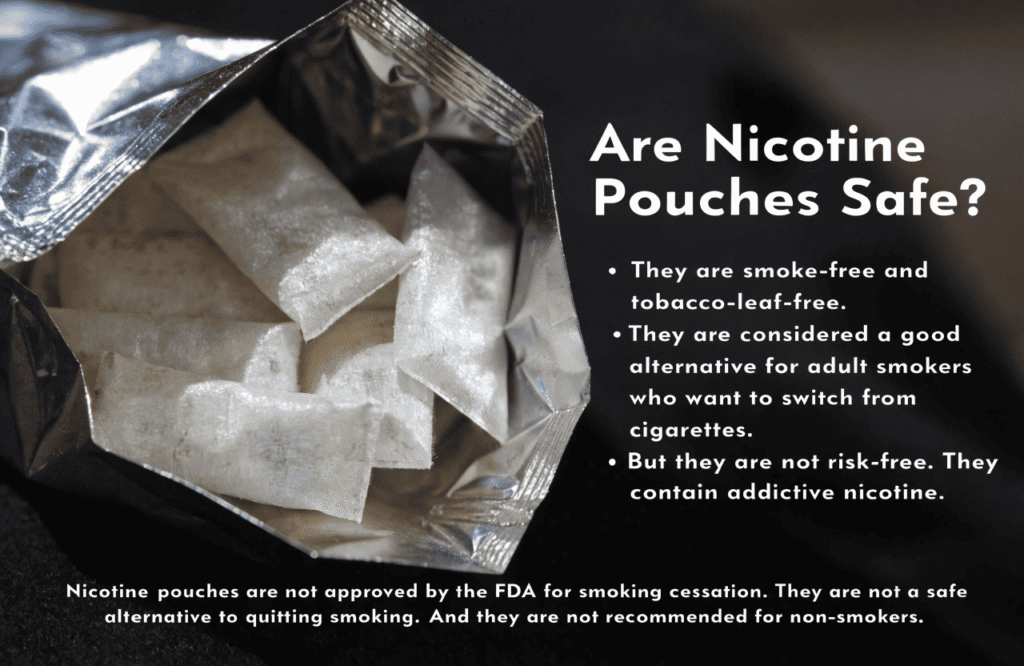
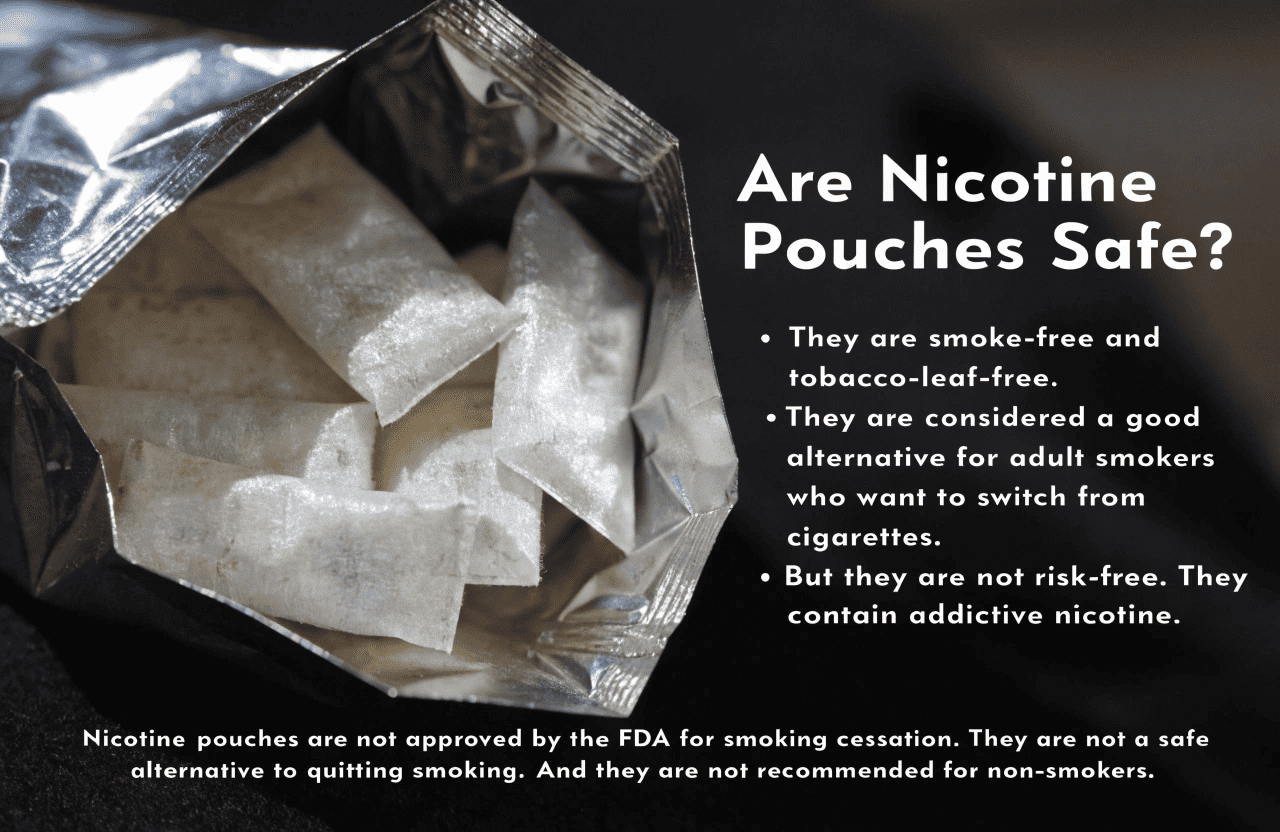
Nicotine pouches are considered a good alternative for adult smokers who want to switch from cigarettes because they are smoke-free and tobacco-leaf-free.1 They are not "good" in a health sense, as they are not risk-free and contain addictive nicotine.
As someone who has helped build pouch brands from the ground up, I hear the word "good" thrown around a lot. But what does it really mean? A product can't simply be good or bad; it's all about context and comparison. Nicotine pouches aren't a health food, and the best choice is always to avoid nicotine. However, for an adult already using a more harmful product like cigarettes, pouches can be a "good" step in a different direction. It all depends on your goals and what you're comparing them to. Let's look at the most common questions I get.
Are nicotine pouches good for quitting smoking?
Trying to quit smoking but the cravings always bring you back? The battle against cigarettes is tough, and going cold turkey often fails. A different approach might be needed.
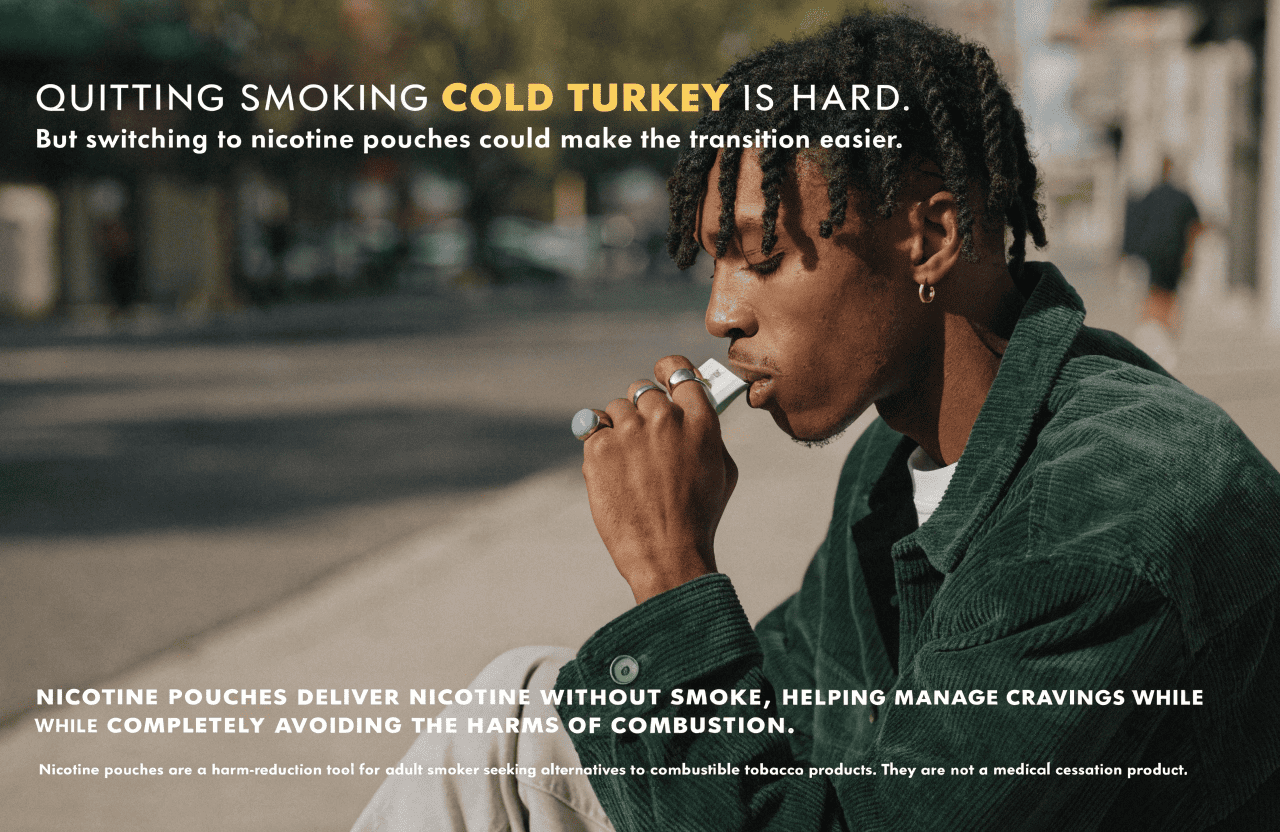
Nicotine pouches can be a good tool for adult smokers who want to switch away from cigarettes. By delivering nicotine without smoke, they help manage cravings while completely avoiding the harms of combustion2. They are a harm-reduction tool, not a medical cessation product.
This is the most important "good" of them all. The main danger in smoking comes from burning tobacco, which creates thousands of harmful chemicals in the smoke. As a manufacturer, I'm clear with my clients: the science shows that if you eliminate combustion, you reduce harm3. Nicotine pouches do exactly that. They give you the nicotine you crave without any smoke, tar, or ash. Think of it as satisfying the need without the most dangerous delivery method. It’s important to be honest, though. This is different from quitting nicotine entirely. Pouches help you stop smoking, which is the biggest single step you can take. Quitting nicotine itself is another journey.
Cessation vs. Harm Reduction: A Key Distinction
| Approach | Goal | Method | Product Examples |
|---|---|---|---|
| Harm Reduction | Quit smoking by switching to a less harmful product. | Delivers nicotine without combustion. | Nicotine Pouches, Vaping |
| Cessation | Quit all nicotine use. | Gradually reduces or replaces nicotine with medical aids. | Nicotine Gum/Patches (NRT), Cold Turkey |
Are nicotine pouches good for quitting vaping?
Tired of being tethered to a device? The constant need for batteries, coils, and e-liquids can be a hassle, and the vapor clouds aren't always welcome.
Yes, nicotine pouches can be good for quitting vaping by helping you break the hand-to-mouth habit. They satisfy nicotine cravings without the physical action of puffing, offering a more discreet way to transition away from devices.

I see many people switch from vaping to pouches for a simple reason: freedom. Vaping has two parts: the nicotine and the physical habit of inhaling. Pouches let you satisfy the nicotine need while breaking the hand-to-mouth action completely. This can be a powerful step if your goal is to disconnect from the constant puffing ritual. For my clients' brands, this is a huge selling point. It's about convenience and discretion. You can use a pouch anywhere—in a meeting, on a plane, at a dinner—without producing a cloud of vapor or needing any equipment. It separates the nicotine from the public performance of vaping, making it a private and much simpler experience.
Breaking the Vaping Habit
- Satisfy Nicotine Cravings: Pouches deliver steady nicotine to keep withdrawal at bay.
- End the Hand-to-Mouth Ritual: Since there’s no device to hold or inhale from, you break the behavioral loop.
- Ultimate Discretion: Pouches are invisible to others, making them perfect for situations where vaping is not allowed or is considered rude.
Are nicotine pouches good for working out?
Heard about athletes using pouches before a big game? It's tempting to think it's a magic bullet for performance, but the reality is more complicated and comes with risks.
No, nicotine pouches are not a recommended workout supplement. While nicotine is a stimulant that can temporarily increase heart rate and alertness4, it can also constrict blood flow and strain the cardiovascular system, which is dangerous during exercise.
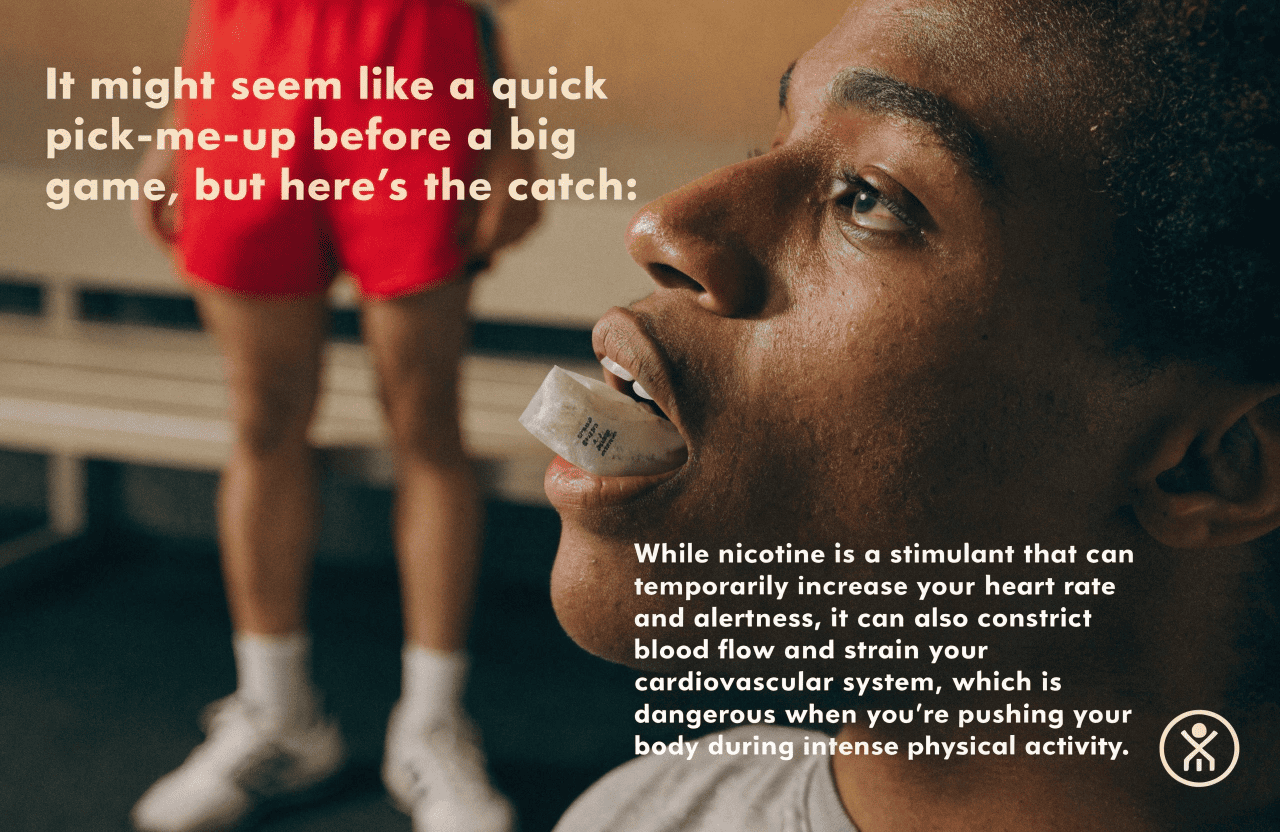
I have to be very direct about this: do not use nicotine pouches as a pre-workout. While it's true nicotine acts as a stimulant, using it during physical exertion is a bad idea. A stimulant raises your heart rate and blood pressure. Your heart is already working hard during exercise; adding nicotine on top of that is like redlining your car's engine. It puts unnecessary strain on your cardiovascular system. Some anecdotes might claim it helps with focus, but the physical risks far outweigh any potential mental benefit in this context. It can also lead to dizziness or nausea when you're pushing your body to the limit. For performance, stick to proper nutrition, hydration, and training. Nicotine has no place in a healthy workout routine.
Why You Shouldn't Mix Nicotine and Exercise
- Increased Heart Strain: Both exercise and nicotine raise your heart rate; the combination is risky.
- Vasoconstriction: Nicotine constricts blood vessels, reducing blood flow to your muscles when they need it most5.
- Masking Fatigue: It might make you feel more alert, but it doesn't solve underlying fatigue, leading to overexertion.
Are nicotine pouches good for ADHD?
Struggling with ADHD and heard nicotine might help? While there's some science behind it, self-medicating with an addictive substance is a dangerous path.
Nicotine is not a safe or recommended treatment for ADHD6. While its stimulant properties can mimic the effects of some ADHD medications by improving focus, the high risk of addiction makes nicotine pouches an unsuitable and dangerous option.
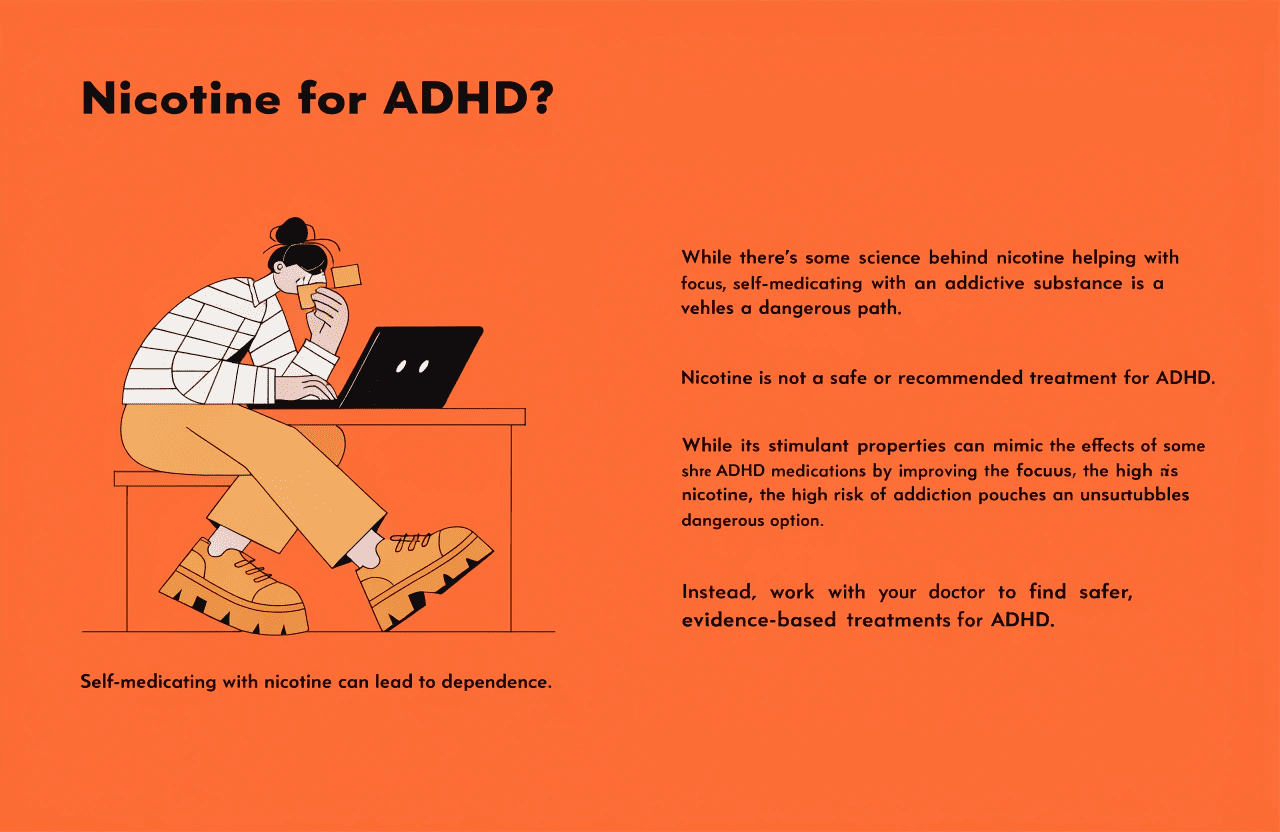
It's a known fact in science that nicotine, as a stimulant, can temporarily improve attention and concentration. This is why some individuals with untreated ADHD find themselves drawn to nicotine products—it can feel like it's helping. However, and I cannot stress this enough, this is a terrible idea. The potential for addiction is extremely high. Using an unregulated, addictive substance to manage a serious medical condition is a trap. You might develop a dependency on nicotine that creates far more problems than it solves. ADHD requires a proper diagnosis and a treatment plan from a medical professional, which may or may not include prescribed stimulant medications that are carefully dosed and monitored. Nicotine pouches are not a substitute for professional medical care.
Doctor vs. Self-Medication
| Treatment | Supervision | Regulation | Addiction Risk | Recommendation |
|---|---|---|---|---|
| ADHD Medication | Prescribed and monitored by a doctor. | FDA-regulated for safety and efficacy. | Managed by medical professionals. | The correct path. |
| Nicotine Pouches | No medical supervision. | Not approved as a medical treatment. | High and unmanaged. | Strongly advised against. |
Are nicotine pouches good for focus?
Have a big project and need to lock in? We've all looked for an edge to improve focus, but using nicotine pouches for it is a slippery slope.
Nicotine pouches can provide a temporary feeling of heightened focus because nicotine is a stimulant. However, this effect is short-lived, and regular use leads to dependence, where you need nicotine just to feel normal rather than focused.

When I consult for brands, we have to be honest about the user experience. For someone who doesn't use nicotine, the first few times might create a noticeable buzz and a feeling of sharp focus. The brain gets a jolt. The problem is, your brain quickly adapts. Soon, that feeling of enhanced focus is gone. Instead, your brain starts to see your normal, non-nicotine state as "unfocused." You then need a pouch not to get an edge, but just to get back to your baseline. This is the core of nicotine dependence. You're no longer using it for a boost; you're using it to stave off the sluggishness of withdrawal. It's a short-term loan for focus that you pay back with long-term dependence.
The Focus Trap
- Initial Boost: The first uses might feel like they enhance concentration.
- Brain Adaptation: Your brain adjusts and down-regulates its own "focus" chemicals.
- Dependence: You now need nicotine just to achieve your previous normal level of focus.
- The Cycle: Without nicotine, you feel distracted and foggy, reinforcing the need for the next pouch.
Are nicotine pouches good for cognitive function?
Wondering if nicotine can make you smarter? The link between nicotine and cognitive function is complex, but it's not a simple "brain-booster."
While some studies show nicotine can temporarily enhance specific cognitive tasks like reaction time7, it is not a recommended cognitive enhancer. The significant risks of addiction and negative cardiovascular effects outweigh these minor, short-term benefits8.
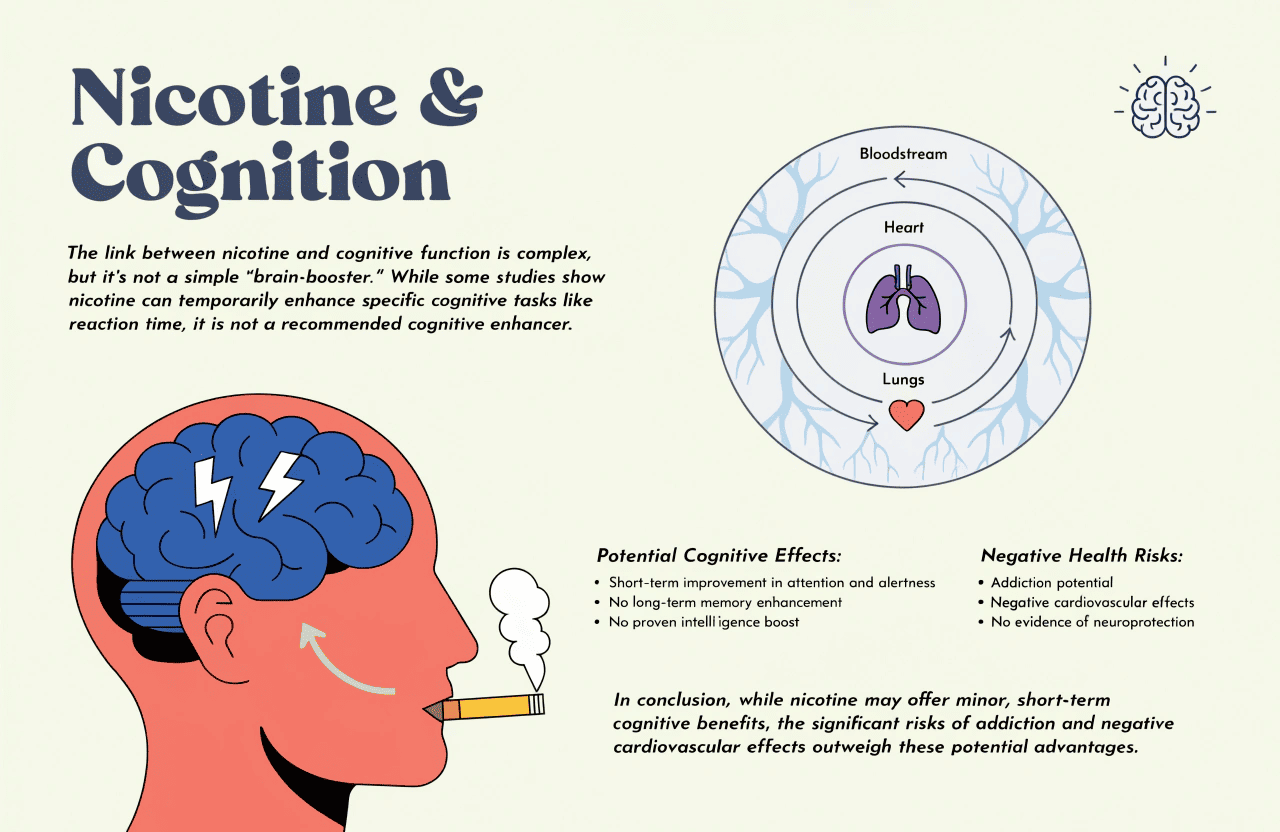
This topic comes up in research circles, and the findings are nuanced. Yes, as a stimulant, nicotine can briefly speed up certain mental processes. Think of it like overclocking a computer—you might get a short burst of speed, but you also risk system instability and long-term damage. The cognitive benefits are narrow and temporary. They do not equate to making you "smarter" or improving your overall intelligence. When you weigh these small, fleeting benefits against the massive, well-documented risks of nicotine addiction, a negative impact on heart health, and the unknown long-term effects of constant use, the conclusion is clear. Nicotine pouches are not a nootropic or a brain supplement. They are an adult nicotine product for smokers, not a tool for cognitive enhancement.
Conclusion
Nicotine pouches are not a health product. They are a good option for adult smokers looking for a less harmful alternative but are a poor choice for performance, focus, or self-medication.
-
"Nicotine Pouches | Smoking and Tobacco Use - CDC", https://www.cdc.gov/tobacco/nicotine-pouches/index.html. A public health agency review, such as from the US Food and Drug Administration or Public Health England, has noted that nicotine pouches contain nicotine but no tobacco leaf and produce no smoke, which potentially reduces exposure to combustion-related toxins. Evidence role: general_support; source type: government. Supports: Nicotine pouches are a smoke-free and tobacco-leaf-free alternative for adult smokers.. Scope note: Evidence addresses emission reduction, not overall safety or cessation efficacy. ↩
-
"Effects of tobacco on health", https://www.who.int/europe/news-room/fact-sheets/item/effects-of-tobacco-on-health. Clinical and toxicological reviews from agencies like the WHO and CDC have described that non-combustible nicotine delivery systems expose users to markedly fewer combustion by-products compared with cigarette smoke. Evidence role: mechanism; source type: institution. Supports: Nicotine pouches manage cravings and avoid smoke-related harm.. Scope note: Fewer toxins does not necessarily translate into overall health safety. ↩
-
"Toxicity of Fresh and Aged Anthropogenic Smoke Particles Emitted ...", https://pmc.ncbi.nlm.nih.gov/articles/PMC12131020/. Tobacco harm reduction literature, such as reports from the Royal College of Physicians, indicates that removing combustion substantially reduces many toxic exposures associated with smoking. Evidence role: mechanism; source type: research. Supports: Reducing harm by eliminating combustion in nicotine delivery.. Scope note: This evidence applies to reduced exposure, not complete risk elimination. ↩
-
"Effects of Nicotine on Attention and Inhibitory Control in Healthy ...", https://pmc.ncbi.nlm.nih.gov/articles/PMC4266322/. Cardiovascular physiology research demonstrates that nicotine acutely stimulates the sympathetic nervous system, raising heart rate and subjective alertness. Evidence role: mechanism; source type: paper. Supports: Nicotine increases heart rate and alertness temporarily.. Scope note: Acute physiological effects do not describe long-term health outcomes. ↩
-
"Nicotine and Vascular Dysfunction - PMC - NIH", https://pmc.ncbi.nlm.nih.gov/articles/PMC8026694/. Cardiovascular research confirms that nicotine causes vasoconstriction through adrenergic receptor activation, reducing peripheral blood flow. Evidence role: mechanism; source type: paper. Supports: Nicotine constricts blood vessels and reduces blood flow.. Scope note: Magnitude of effect differs depending on individual physiology and dose. ↩
-
"The Association Between Attention-Deficit Hyperactivity Disorder ...", https://pmc.ncbi.nlm.nih.gov/articles/PMC4306279/. Medical consensus statements, such as those from the American Psychiatric Association, specify that nicotine is not an approved or safe therapy for ADHD symptom management. Evidence role: expert_consensus; source type: institution. Supports: Nicotine is not a safe or recommended treatment for ADHD.. ↩
-
"Cognitive Effects of Nicotine: Recent Progress - PMC", https://pmc.ncbi.nlm.nih.gov/articles/PMC6018192/. Meta-analyses of human cognitive performance experiments report that nicotine can transiently improve reaction time and attention under controlled conditions. Evidence role: statistic; source type: research. Supports: Nicotine can temporarily enhance cognitive tasks like reaction time.. Scope note: Effects are short-term and vary widely between individuals. ↩
-
"Cardiovascular Effects of Smoking and Smoking Cessation: A 2024 ...", https://pmc.ncbi.nlm.nih.gov/articles/PMC11843939/. Public health and addiction research consensus indicates that nicotine dependence and cardiovascular stress are well-documented, outweighing short-term cognitive effects observed in controlled studies. Evidence role: expert_consensus; source type: research. Supports: Addiction and cardiovascular risks from nicotine outweigh short-term cognitive benefits.. Scope note: Quantitative harm-benefit comparisons vary by population and use context. ↩